


By Verlon Salley
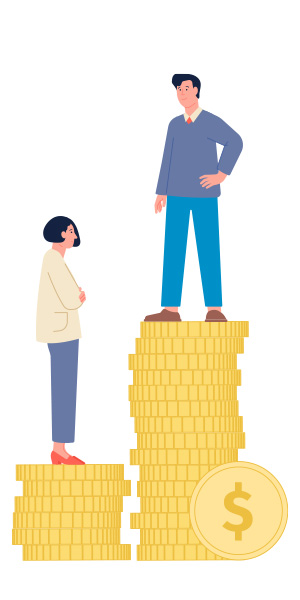 I was reading an article online about research looking at equity in gender pay. It appears that the gender pay gap has remained stable for the last 20 years. Today, women have an earning average of 82% of what a man makes. In 2002, women had an earning average of 80% of what a man made. Can anyone tell me what could be the rationale behind this gap? (As if we don’t have assumptions).
Since you are reading an imaging magazine, let’s focus on radiologists. What could be the difference between a male radiologist and a female radiologist, as far as work performance? I was never a practice administrator, but I am sure whether male or female you had to attend medical school. Then, after medical school – whether male or female – you had to pursue a residency. Some radiology students specialize in interventional radiology, which in the past five years has become its own discipline. Some radiology residents pursue fellowships to specialize in a particular anatomy (neuro radiology, abdominal radiology, MSK radiology, etc.). In other words, the differences cannot be in education, so it must be with innate differences in the genders.
There could be a lot of variables that could cause a pay gap:
• Merit increases
• Incentive pay
• Overtime
• Medical directorships
• Administrative duties
We are fooling ourselves if we ignore the dominant factor. The dominant factor that would have to be considered is the ability for females to have a baby. Mothers between the ages of 25-44 are less likely to be in the workforce than women of the same age without children at home. Fathers (males) are much more likely to be in the workforce, and are apparently able to make 18% more than a women with the same performance. To make matters more interesting: Black women make only 70% as much as white men; White women 83%; and Hispanic women earned only 65%. Asian women made 93% as much as White men, which was the closest to complete fairness.
This brings me to the point of equity and inclusion. Who decides someone’s pay? Why would it not be based on work performance and years of experience? How does the compensation department at someone’s workplace continue to support this work gap? When are you going to ask the right questions?
A wise man once told me, if you’re not at the table then you are on the menu. Who is at the table asking the above questions to your compensation department? When are you going to inquire about a gender pay review at your place of work? When are you going to realize that equity and inclusion is everyone’s job? Get to work! •
Verlon Salley is the vice president of community health equity at UAB Health System.
