

Staff report
Diagnostic imaging continues to serve a major role in healthcare worldwide. New technology, AI and innovations provide lifesaving images and information that healthcare providers use on a daily basis.
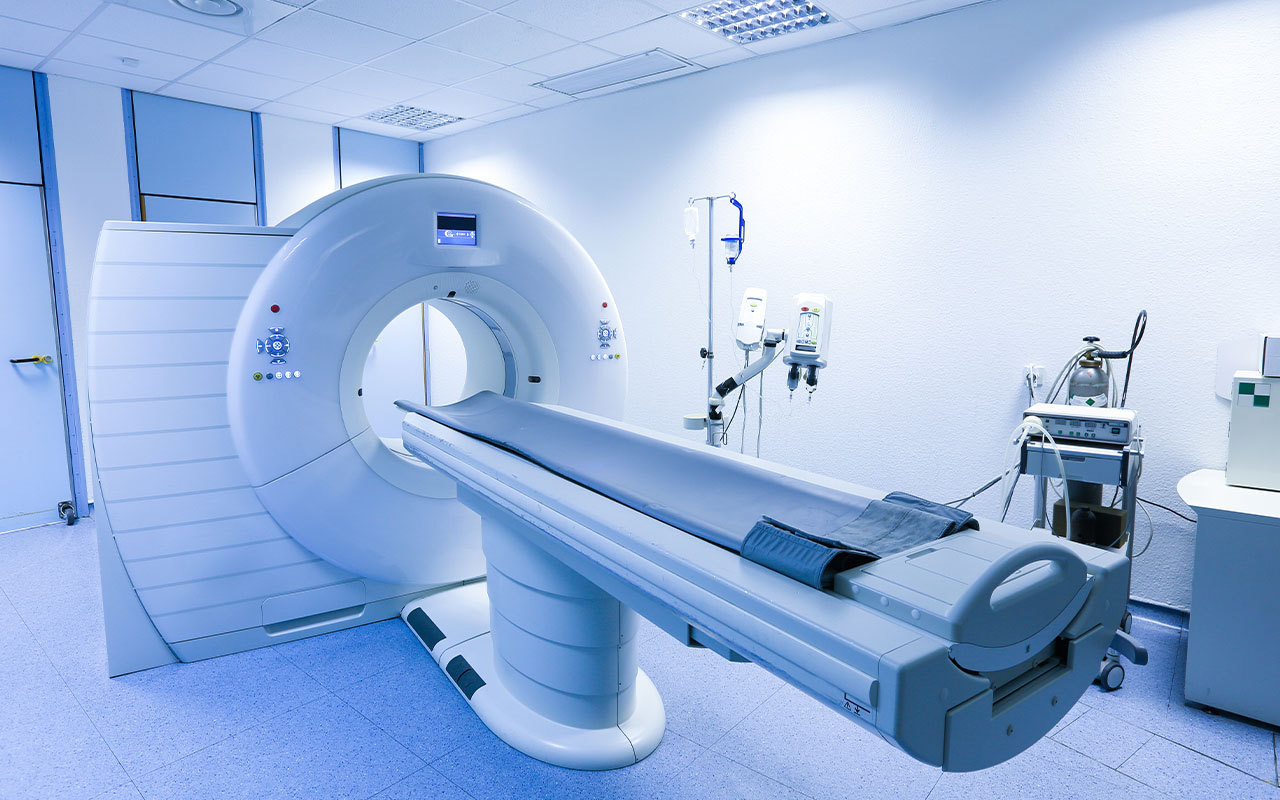
Research firms predict continued growth of the diagnostic imaging market in the United States and globally in the coming years. Computed tomography (CT) is one segment of the diagnostic imaging field that experts forecast growing into 2030.
Computed tomography is a medical imaging system widely used in healthcare facilities for early diagnosis and disease treatment, and advanced developments in the diagnostic imaging segment have fueled the demand for advanced imaging systems. In addition, the rise in demand and installation of new computed tomography (CT) systems for precise disease prognosis across healthcare settings has led to the growth of the global market.
Fortune Business Insights reports that the global computed tomography (CT) scanners market size was valued at $6.97 billion in 2023 and is projected to grow from $7.34 billion in 2024 to $11.92 billion by 2032, exhibiting a CAGR of 6.3% during the forecast period (2023-2032). Asia Pacific dominated the global CT Scanners Market with a market share of 36.44% in 2023.
“The increase in the prevalence of chronic diseases, such as cancer, neurology diseases, cardiovascular diseases, and orthopedic disorders, has led to a large patient pool in need of diagnostic modalities such as computed tomography and magnetic resonance imaging globally. The prevalence of chronic disorders is high among the global population,” the report states.
For instance, according to the American Lung Association statistics, in 2022, 11.7 million (4.6%) of the U.S. adult population were suffering from chronic obstructive pulmonary disease (COPD).
The introduction of technologically advanced computed tomography (CT) scanners is one of the major factors stimulating the market growth, according to Fortune Business Insights.
“The major industry players operating in the market are continuously involved in developing advanced systems with better disease prognoses, high-resolution results, and improved speed. The surge in the presence of CT scanners across healthcare settings has significantly reduced the time of hospitalization and has supported disease treatment across several disease indications. Recent advances in CT scanning technology include removing harmful radiation to patients, increased speed, and improved image quality,” Fortune Business Insights states.
Moreover, the surge in investments by public and private organizations toward advanced imaging centers is expected to further boost the market growth.
Grand View Research also predicts continued market growth.
The global computed tomography market size was estimated at $4.61 billion in 2023 and is expected to grow at a CAGR of 7.87% from 2024 to 2030, Grand View Research reports.
Technological advancements in computed tomography (CT) technology, coupled with the growing prevalence of chronic disorders, such as cancer, orthopedics, and cardiovascular and neurological conditions, are expected to accelerate market growth, according to the report. Furthermore, increasing awareness and focus on preventive healthcare measures have led to a surge in routine diagnostic procedures, contributing to the expanding market for computed tomography. The introduction of CT has been of great benefit to medical care. This technology improves diagnoses, prevents unnecessary medical procedures, improves treatment by providing detailed anatomical imaging, and is a cost-effective imaging technique.
“The computed tomography industry is accelerating at a moderate to high stage and is expected to witness a high degree of innovation, marked by several instances of regulatory approvals, partnerships, and collaborations. In recent years, the industry has witnessed a significant rise in new product launches, posing a challenge for established players to maintain their foothold in the constantly evolving industry. Key industry players are making substantial investments in R&D activities to create innovative imaging technologies, which are anticipated to drive market expansion,” Grand View Research adds.