

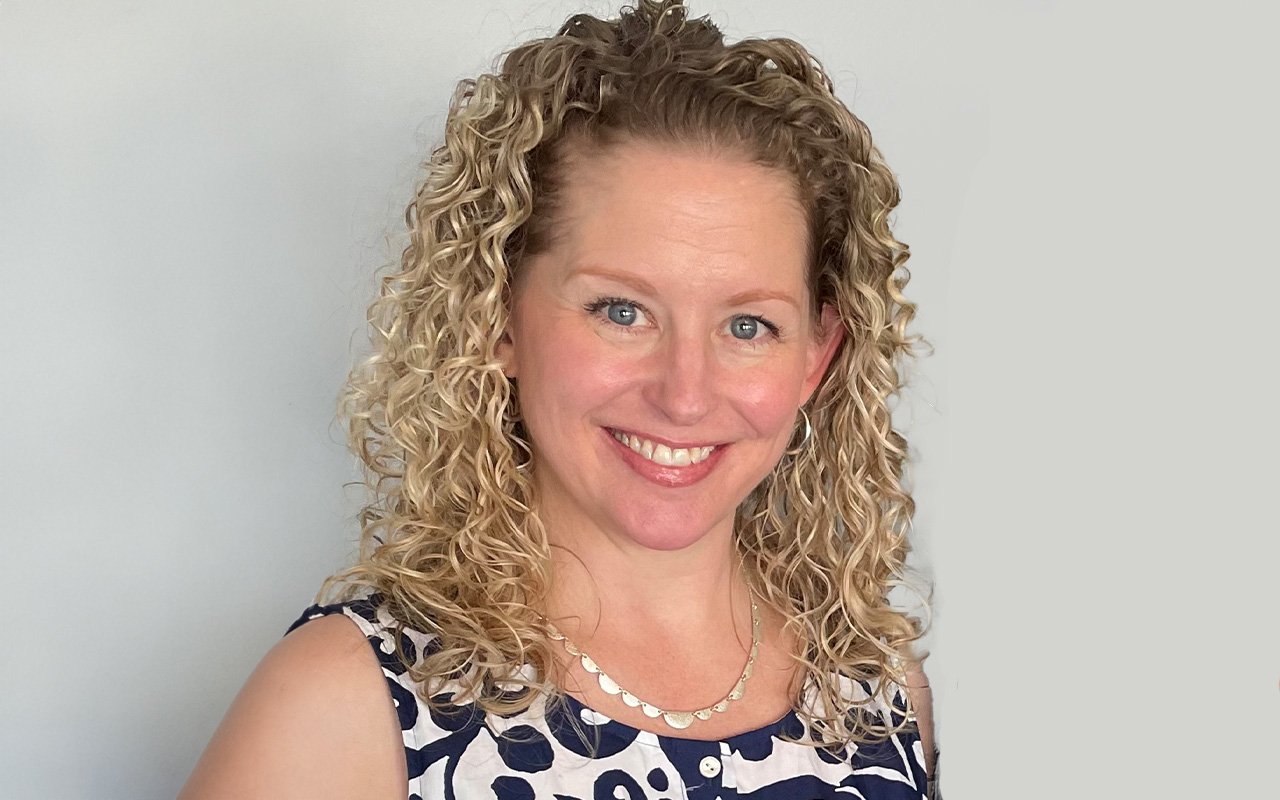
Stacey A. Bass, MD, Ph.D., is an accomplished physician-scientist with extensive training and expertise in diagnostic and interventional radiology, as well as a specialized focus on vascular anomalies. She graduated magna cum laude from Cornell University with a Bachelor of Science in Biology and subsequently pursued her medical and doctoral training through the NIH-supported Medical Scientist Training Program at the University of Virginia School of Medicine.
Bass joined the Yale School of Medicine as an assistant professor of vascular and interventional radiology and pediatrics and serves as medical director of pediatric interventional radiology. Her leadership expertise has since earned her the role of co-chief of interventional radiology, clinical affairs section chief. At Yale, Bass directs her efforts toward her primary academic and clinical passion: the study, diagnosis, and treatment of vascular anomalies. She founded and directs the Yale New Haven Children’s Hospital Vascular Anomalies Program, a globally recognized multidisciplinary group dedicated to advancing care and innovation in this specialized field.
Her decision to work in healthcare is something she can trace to her childhood.
“I always knew I was going to be a doctor since I was a kid. I mean, my mom told me she knew since I was in elementary school that that’s what I was going to do,” Bass said. “I always knew I wanted to do something with my hands, something surgical. Blood never bothered me, and I was always handy at figuring out creative solutions with my hands and my mind, like MacGyver. I was also fascinated with the brain and how the mind processes information. So naturally, neurosurgery made sense.”
“In medical school I gained some experience in neurosurgery and met several neurosurgeons. For many reasons, I realized that neurosurgery was not for me,” she added.
A suggestion from one of her medical school colleagues prompted her to consider imaging.
“While having lunch he said to me, ‘I’m going to do IR, you should really come check it out. I think you would be really good at it,” Bass shared. “And so, I did. I shadowed him in the IR suites in between my Ph.D. experiments. I was instantly hooked. ‘This is really cool’ was the first thing I remember when observing live IR cases. It was much more procedural than I thought going into it.”
Bass continues to enjoy IR.
“We have access to so many cool instruments and tools and we are asked to use them to fix problems that can’t be fixed surgically, either because there is no surgery that you can do for that, or the patient’s just so sick they’re not a surgical candidate,” she said when asked why she loves her job. “And we have to figure out ways to fix a problem because if we can’t do it, there may be no other way for that patient.”
“You really get to use your mind and just figure it out. So, we really are the MacGyvers of medicine, where sometimes we have to use our tools not in the way that they were designed, but in a way that I know it’s going to work,” Bass said.
Among her accomplishments, Bass says the development of the Vascular Anomalies Program at Yale is the one she is most proud of thus far in her career.
“I had to find people, stakeholders, from everywhere, from dermatology, hematology, all different kinds of surgeons, genetics, even nutrition, physical therapy, child life, radiology. I had to develop protocols and go to international meetings. And now we are a referral center for vascular anomalies,” Bass explained. “We diagnose and treat all kinds of anomalies, from a hemangiomas which affects 20% of all births. Those are basically like those strawberry marks that a lot of kids have that mostly just kind of fade over time. That’s the most common type of vascular anomaly that you think of and see without imaging. But some other types are life threatening or can cause significant disability – they could be in your eye, in your tongue, they could be in your airway. These complicated locations require a team of specialists, such as ENT, IR, hematology/oncology to prescribe the medications. It takes a village to take care of these patients.”
Leading by example is not a cliché for Bass. For her, it is the only way to lead.
“There’s always the easy way or the hard way, of doing anything. And I usually choose the hard way, not because I’m a masochist, but because it’s usually the right thing to do. And I’m not afraid of that,” Bass explained. “And so that’s how I lead, I will take the pain because that way I can expect others to take the pain as well. But if I’m not willing to go through it, how can I expect anyone else to?”
Listening, really listening, and knowing how the people she works with process information is another key aspect of her leadership.
“I think emotional intelligence is huge, too. I don’t go into meetings with ego. I go in assuming I’m there to participate and learn as much as I’m in there to instruct,” Bass said. “It’s important to be able to project yourself into someone else’s shoes so you can see where they’re coming from and knock down any barriers before they get in the way of progress.”
Bass points out that she is fortunate to work with amazing people.
“I have benefited from many mentors who each have influenced me in different aspects of my professional life. For example, one of my first mentors was from my previous job, he was the president of the radiology company, and he’s the one who really taught me about leadership, and how to lead by example and, you know, stay calm in the face of doctors screaming at you,” she said. “If you can be the one person in the room who stays calm, everyone looks to you for direction.”
“He taught me to just stop and think, count to five, but think quickly and don’t freak out,” she added.
She also had a mentor specific to IR.
“In terms of IR, my biggest mentor was my chief from my previous job. He was like my IR dad,” Bass said. “He taught me all of these skills. He also taught me practice development, how to build a business, how to get people on your side, how to build a referral base.”
“I took a small community hospital, a 200-bed community hospital, and I built a fibroid embolization program from the ground up. And that’s because he taught me how to partner with an OB/GYN, and then how to directly get to the patients instead of having to go through primary care, and all of the business skills,” she added. “He was instrumental in my ability to do that and how to defend against competing practices on the outside. So, he taught me offense. He taught me defense. He taught me recruitment, everything like that.”
Away from work, Bass says work-life balance is important because burnout is a real challenge.
“You know, I think I didn’t have work-life balance my whole life. So that’s a learned thing. And it’s not instant. I think my generation is probably the last generation who really sacrificed self for the job. And I think that is not a good thing,” she said. “You do really burn out. And I think it’s important that we value each other and our time. And so, I set aside time for my family. But the boundaries are for them, too! I’ve got a 15-year-old daughter who wants me answering her text messages the second she sends them. But I respect my patients and I protect them from, you know, my interruptions for my family, and I protect my family, and myself, from interruptions from my work.”
In summary, Bass loves IR, her job and her family. Her childhood dream to work in healthcare continues to motivate her as she reaches new heights.
1. What book are you reading currently? It’s the novel “You.” My friend told me about the Netflix series but said I should read the book first. It’s kind of really messed up but I’m enjoying it!
2. Favorite movie? “The Princess Bride.” It just has everything, from comedy, drama, action, romance. It’s everything.
3. What is something most of your coworkers don’t know about you? I don’t talk about it much but I’m a marksman, I like to shoot pistols. I’m not competitive, but that it something I really enjoy. I also was a finalist for “The Real World,” which nobody really knows.
4. Who is your mentor? I
5. What is one thing you do every morning to start your day? Peloton, cup of coffee. The Peloton is not, I guess, every day – I mean, who’s that good? But always the cup of coffee.
6. Best advice you ever received? Don’t be afraid of the hard way. Be willing to do the hard thing, because the payout is so much more in the end.
7. Who has had the biggest influence on your life? My parents. My dad gave me a lot of my drive and my mom was the emotional side that I needed, the shoulder to cry on. One side without the other could have been a disaster, but having the two was perfection.
8. What would your superpower be? I just think the ability to fly would be so cool.
9. What are your hobbies? I make sure to find time for gardening and cooking. I love to cook what I grow so that’s a real passion of mine. Had I not been a doctor, I would have been a pastry chef, most likely. Baking has such variety and it’s so scientific, and also takes incredible skill and patience!
10. What is your perfect meal? A rib eye on the grill, rare, with garlic smashed potatoes and perfectly done green beans.
In Focus Nomination