

For imaging professionals, finding the right tools to safely and efficiently work around sophisticated equipment can make a significant difference. GL Sciences brings its expertise in analytical instrumentation and accessories to this challenge with technology designed to make gas leak detection quick, accurate and convenient.
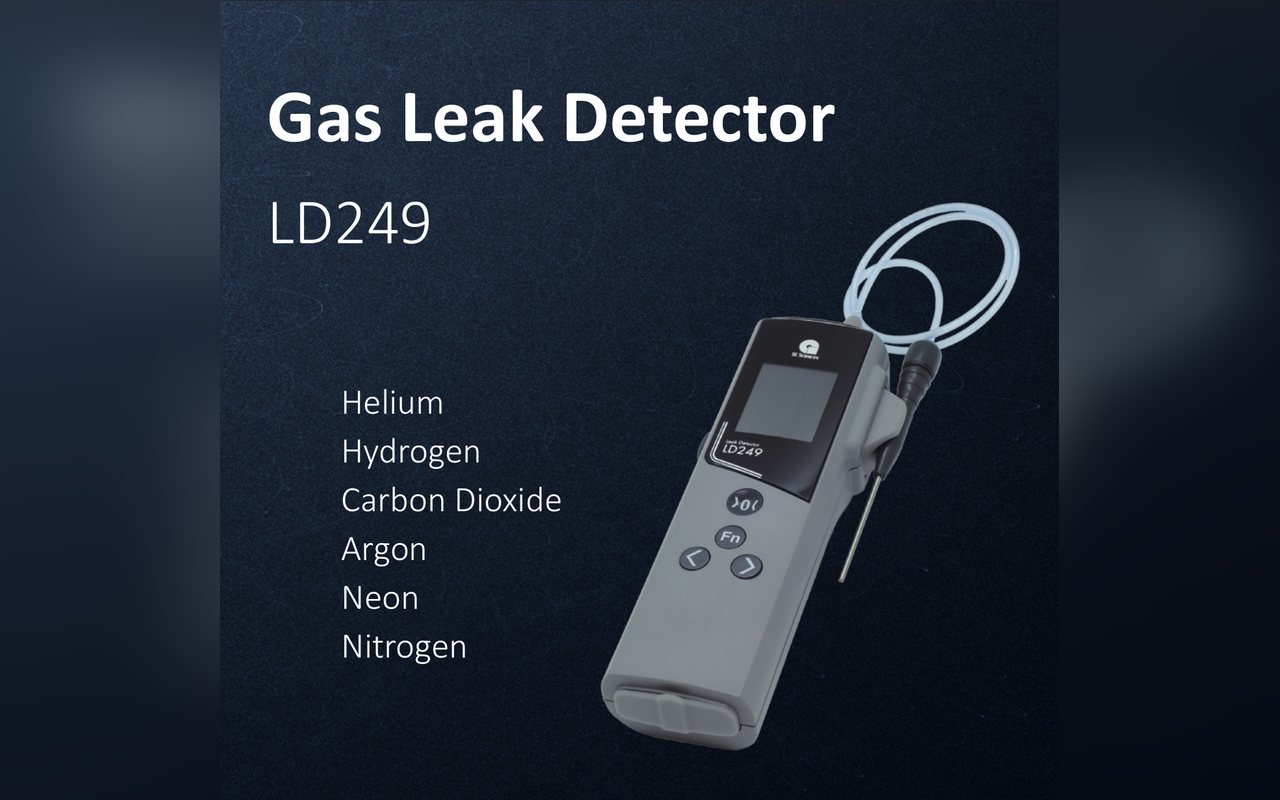
Among the company’s offerings is the LD249 series of portable, handheld gas leak detectors, which use differences in thermal conductivity to detect a variety of gases. The LD249-B is specifically designed for use in high-magnetic-field environments, including MRI settings, making it especially relevant to imaging service professionals.
GL Sciences International Marketing Manager Yasuaki Kirihara recently shared more about the company and how it supports imaging departments and imaging centers across the nation.
Q: Can you tell us a little about your company?
KIRIHARA: GL Sciences specializes in chromatography consumables, analytical columns and analytical instruments, supporting researchers and laboratories around the world.
One of the products developed by applying the precision analytical technologies and expertise we have accumulated over many years is the LD249 Gas Leak Detector.
The LD249 was originally developed for highly sensitive detection of small gas leaks in chromatography systems. Today, it is also widely used and trusted as an effective tool for detecting minute leaks in a variety of instruments and systems that use helium.
Q: How does your company stand out in the imaging space?
KIRIHARA: Although our roots are in analytical chemistry, we are also contributing to the medical imaging field through the LD249 by applying the high levels of precision and sensitivity we have developed for analytical laboratory applications.
Helium is an essential and costly resource for MRI systems, making early and accurate leak detection extremely important.
A key advantage of the LD249 is that it provides laboratory-grade helium detection sensitivity in a compact, portable and easy-to-use handheld device.
This enables field service engineers to quickly and accurately identify very small helium leaks and take action before they result in significant helium loss or extended equipment downtime.
Q: What is on the horizon for your company? Do you have any goals you would like to achieve in the near future?
KIRIHARA: Our goal is to leverage the sensing and analytical technologies we have developed over the years and expand their applications into a wide range of industries, including the medical imaging field.
By enabling early detection of gas leaks in various types of equipment and systems, we aim to contribute to improved operational reliability and greater efficiency across multiple industries.
Q: Is there anything else you would like ICE Magazine readers to know?
KIRIHARA: With ongoing challenges in helium supply and rising costs, early detection of helium leaks and prevention of helium loss are becoming increasingly important for MRI operations.
The LD249 was developed based on the precision manufacturing technologies and rigorous quality control standards that GL Sciences has cultivated in Japan over many years.
We look forward to connecting with MRI service engineers and medical imaging professionals and showing how the LD249 can make high-sensitivity helium leak detection both simple and effective.
For more information, visit https://tinyurl.com/yc4xx5u5.