

The Association of American Medical Colleges (AAMC) does not only create curriculum to guide the future of medical education, but they have also begun to prepare medical schools and teaching hospitals to meet society’s evolving health needs. The AAMC is committed to equity, diversity and inclusion (DEI). They are developing strategic initiatives to cultivate a diverse and culturally prepared workforce, advance inclusion excellence, imbue equity-mindedness and enhance engagement with local communities (aamc.org).
Recently, I had the pleasure of witnessing a presentation by one of the AAMC’s leaders about “Advancing Racial Equity in Academic Medicine.” During this presentation, the presenter elaborated upon four crucial questions. These questions can be asked by any of us in reference to our own employer. Moreover, their downstream effect on the patients we care for.
Question 1: “Who is represented?”
The answer to the question relates directly to a narrative of your institution’s culture and how it exemplifies its core values. I am positive your employer has core value language around hiring competent staff that work to deliver high compassionate care. Take a good look at the racial demographics of your staff. Is your staffing racial representation made of the same racial makeup of the patients they are serving? If the answer is no … then why are they not represented in your organization’s culture? I am positive that every race of people has competent candidates that can exemplify your organization’s core value. Find them and hire them to improve your patients’ experience.
Question 2: “Who feels that they belong?”
This relates to inclusion. As a nation, we have created a sense that there is always an “other” category. Should this exist in patient care? Why would one group get priority of another, when the purpose of health care is to meet the care needs of the patient. Although this is the fundamental truth, there are incidents in history where a race of people have been experimented on and exploited (examples include Henrietta Lacks, Tuskegee Experiment, Vertus Hardiman). Situations like these have led some individuals to believe that they do not belong or can’t trust the medical system. Creating more inclusion strategies to employ diversity can be a step in the direction to help to resolve trust issues.
Question 3: “Who is able to thrive?”
Even if we have embraced an idea of diversity and we have counteracted the dominant narrative on who should be included in our ranks, we have not really identified how we ensure that everyone is able to reach their own individual goals. We are just now beginning to ask those questions in health care organizations about what race, gender or type of individuals are being promoted and hired into leadership positions within our organizations. Do the hiring and promotion statistics show equity across all demographics? Trust me. I already know the answer to this, but I want you to ask it of your organizations.
Question 4: “Who are we accountable to?”
There is a typical group that you may be thinking of – the board of directors, administration, payers. To counter this top-down approach, I want you to think of other groups we should be accountable to. They are our local communities, patients and staff. How can we hold true to our organization’s values if we are not true to hiring from within the cultures that exist in our immediate community? Therefore, guaranteeing we are serving our patients and including them in our vision. •
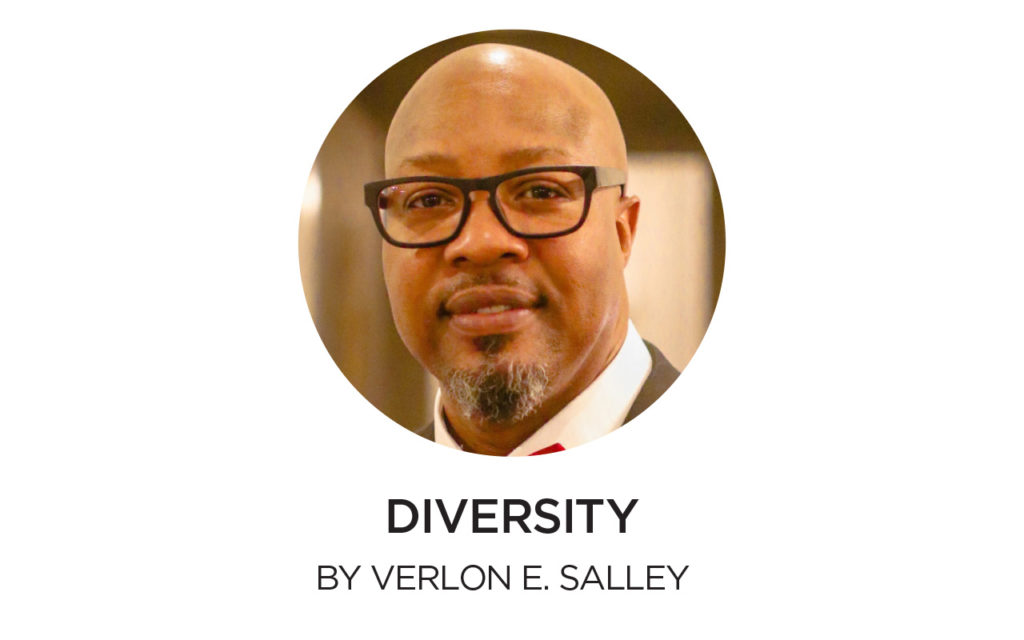
Verlon Salley is the vice president of community health equity at UAB Health System.