

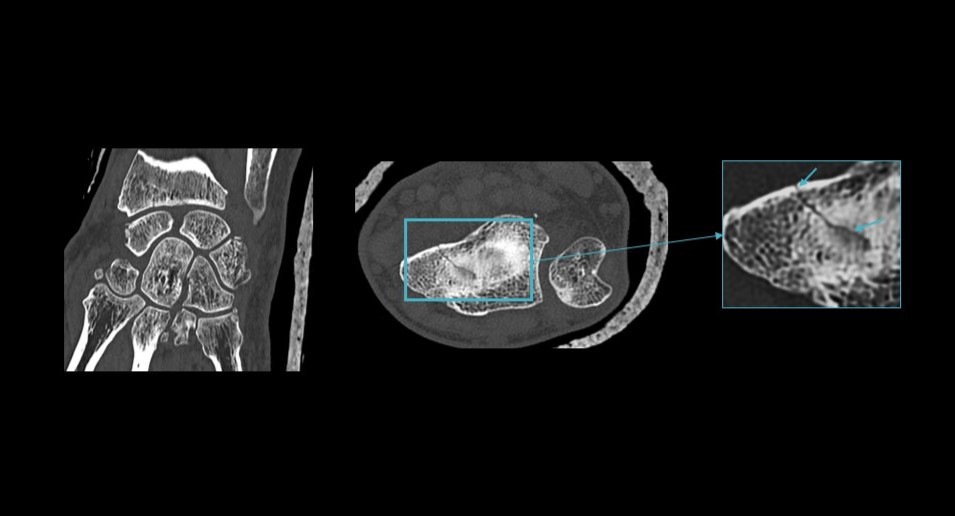
GE HealthCare has received 510(k) clearance from the U.S. Food and Drug Administration (FDA) for True Definition DL,ii the latest addition to its growing portfolio of deep learning image reconstruction solutions for computed tomography (CT). Designed to deliver crisp, high-resolution images with exceptional sharpness, True Definition DL builds on the company’s established TrueFidelity DL and True Enhance DL technologies – helping support fast scans and broader coverage across pulmonary, musculoskeletal, and inner ear imaging.
“Image quality matters in healthcare – because when imaging performance is aligned with the specific diagnostic task, it plays a critical role in improving accuracy, enabling earlier detection, and guiding appropriate patient care,” shares Chad Rowland, Executive Director, Global Premium CT and Photon Counting, GE HealthCare. “For clinicians, diagnostic confidence begins with the ability to clearly visualize subtle structures, differentiate tissues, and trust what is seen on the screen. For patients, that clarity can translate into quicker answers, fewer repeat scans and care plans tailored to their specific needs. With new tools like deep learning at our disposal, the industry has entered a new era in which reconstruction methods are more accessible to a broad range of providers, delivering sharp, consistent images and enabling care teams to make timely, well-informed decisions that directly impact patient outcomes.”
As chronic diseases continue to rise worldwide,[iii] the demand for fast, precise imaging is accelerating. The cancer burden alone is projected to increase by over 75 percent by 2050,[iv] while cardiovascular disease prevalence is expected to rise by nearly 90 percent – driven by aging populations and rising risk factors[v] – placing unprecedented pressure on clinicians and diagnostic systems for early detection.
Imaging sits at the center of modern care, with billions of diagnostic imaging exams performed globally each year, and volumes continuing to rise as demand for earlier detection and disease management grows.[vi] Increasingly, deep learning is transforming how these images are reconstructed and interpreted. By harnessing advanced neural networks and high-performance computing, DL enables sharper images, improved detectability, and faster processing compared to traditional approaches.
GE HealthCare helped pioneer this shift with the introduction of TrueFidelity™ DL for whole‑body imaging in 2019 – the industry’s first deep learning–based image reconstruction technology[vii] – and later expanded the solution to support high‑definition gated cardiac scan modes, designed to sharpen the vessel lumen and enhance contrast‑rich structures. Today, innovations like True Definition DL continue to advance what’s possible by delivering consistently high‑quality images at the speed clinicians need for confident decision‑making – enhancing spatial resolution in high‑contrast regions, including bone (such as the inner ear) and lung imaging.
True Definition DL: Harnessing the power of deep learning
High-resolution imaging is especially critical in areas like lung and musculoskeletal care, where detecting subtle structures can significantly impact outcomes. Yet historically, improving image detail has required trade-offs, including higher radiation dose, longer scan times, or limited coverage. Newer technologies such as photon counting CT hold promise, but broad access to scalable, AI-driven advancements like deep learning are increasingly important as imaging demands grow.
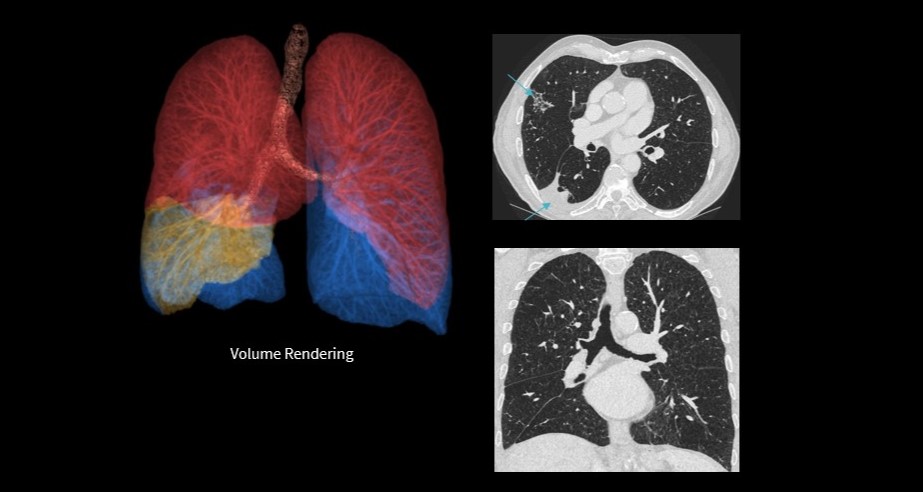
True Definition DL is designed to overcome these limitations by delivering exceptional clarity in high resolution CT imaging for bone and lung without compromising dose efficiency or acquisition speed. Its DL–driven approach enhances spatial resolution across multiple directions, integrates artifact suppression, and supports high definition (HD) mode to improve the visibility of fine anatomical structures such as small airways, pulmonary nodules, and trabecular bone patterns. This enhancement is critical for high-contrast imaging tasks, particularly in bone and lung imaging, where diagnostic confidence hinges on the ability to resolve subtle details.
Additionally, the solution offers a 1024 matrix for high resolution display, and chest imaging achievable in under one second, empowering clinicians to see more, diagnose with greater confidence, and expand access to high resolution imaging performance across a broader range of clinical settings.
“True Definition DL delivers exceptional spatial resolution for visualizing very small anatomical structures,” shares Dr. Stefanie Bitschnau, radiologist and collaborator at Radiomed. “In chest imaging, this level of detail is particularly valuable for assessing small airways, supporting earlier and more confident evaluation of interstitial lung disease. Additionally, the technology is highly beneficial in applications such as inner ear imaging with petrous bone scans, where it allows us to clearly visualize the auditory ossicles and detect erosions at an early stage. This improved definition also supports more confident fracture assessment.”
True Definition DL joins the company’s extended deep learning portfolio for CT – including TrueFidelity DL and True Enhance DL – which leverages dedicated Deep Neural Networks (DNN) for image reconstruction, offering clinicians around the world improved images with better detail and quality for critical insights.
For more information on GE HealthCare’s CT portfolio, including its deep learning solutions, visit gehealthcare.com.
[i] Durlach, P. Stat. “Almost Every Patient Story Starts with an Image.” February 14, 2022. https://www.statnews.com/sponsor/2022/02/14/almost-every-patient-story-starts-with-an-image/.
[ii] True Definition DL is 510(k) cleared with the U.S. FDA. Not CE Marked. Not available for sale in all regions.
[iii] Feigin VL, Vos T, Nichols E, et al. The global burden of neurological disorders: translating evidence into policy. Lancet Neurol. 2020;19(3):255-265. doi:10.1016/S1474-4422(19)30411-9.
[iv] World Health Organization. “Global Cancer Burden Growing, Amidst Mounting Need for Services.” February 1, 2024. https://www.who.int/news/item/01-02-2024-global-cancer-burden-growing–amidst-mounting-need-for-services.
[v] Chong, Bryan, Jayanth Jayabaskaran, Silingga Metta Jauhari, Siew Pang Chan, Rachel Goh, Martin Tze Wah Kueh, Henry Li, Yip Han Chin, Gwyneth Kong, Vickram Vijay Anand, et al. “Global Burden of Cardiovascular Diseases: Projections from 2025 to 2050.” European Journal of Preventive Cardiology 32, no. 11 (August 2025): 1001–1015. https://doi.org/10.1093/eurjpc/zwae281.
[vi] Read My MRI. “How Many Medical Imaging Scans Are Done Per Year? MRI, CT, PET, Ultrasound & X-Ray Statistics.” March 2, 2025. https://readmymri.com/blog/how-many-medical-imaging-scans-are-done-per-year?utm_source=chatgpt.com.
[vii] TrueFidelity/deep learning image reconstruction r receives the first FDA 510(k) clearance in April 2019. https://gehealthcare.ent.box.com/file/1815918747694.