

The national poll of 1,006 people found:
• 75% believe using AI to minimize human errors is important.
• 71% would like AI to reduce wait times.
• 70% are comfortable with AI taking notes during an appointment.
• 66% believe AI should improve work-life balance for health care providers.
“We found it saved up to four minutes per visit. That’s time the physician can use to connect with the patient, do education and make sure they understand the plan going forward,” Tripathi said. “A few clinicians preferred their old workflow but, overall, 80% completed the pilot. In fact, we allowed them to keep using the AI solution afterward because it had significantly impacted their practices in the eight weeks of testing.”
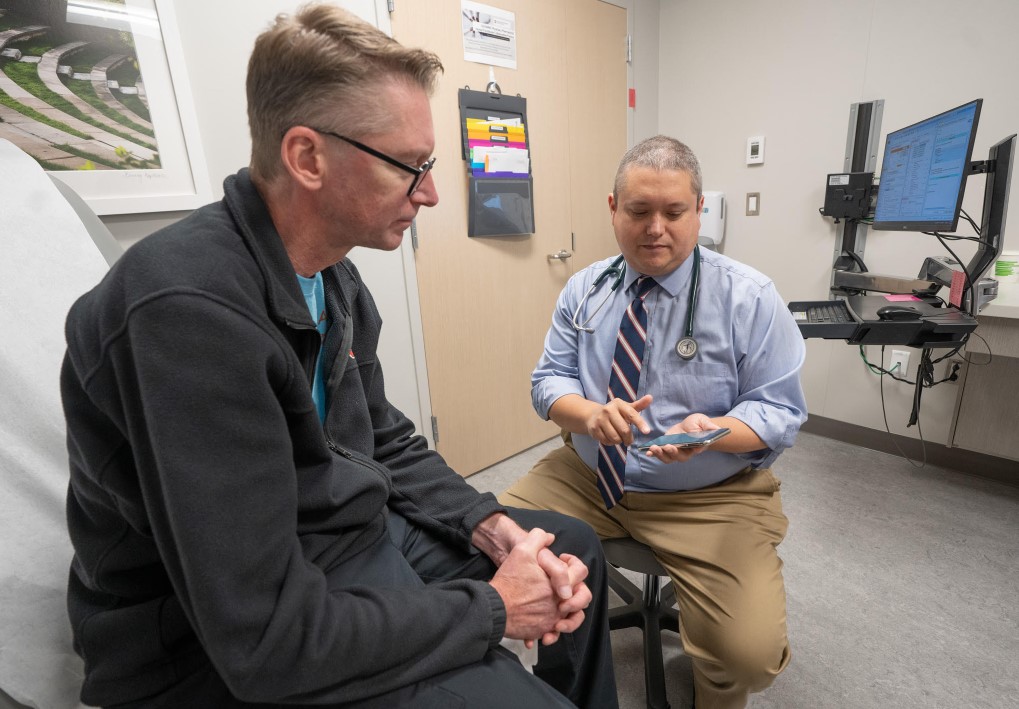
One of the pilot participants was Harrison Jackson, MD, an internist who has been frustrated by the typing that has to take place during each patient visit.
“Documentation is necessary, but it takes away from the quality of patient interaction during a visit. I even apologize. I say, ‘I’m sorry, I know I’m making more eye contact with the computer than with you,’” Jackson said.
After testing AI documentation, Jackson reports some occasional missteps such as incorrect pronouns or mistaking one word for another – all things he said were easily fixed during his chart review. He supports the use of AI going forward in healthcare.
“I’m spending as much if not more time with each patient, and it’s higher quality time with more eye contact. I often mention aspects of a physical exam out loud for the AI program to capture, and it prompts a good conversation with my patient,” Jackson said. “I’ve also let our residents use the technology under my supervision, and we’ve noticed the quality of their patient interactions and the quality of plans they present have improved.”
While most Americans also see value in AI for healthcare, the survey found just over half (56%) still find it a little scary and 70% have concerns about data privacy.
“I know patients are concerned about the privacy and the security of their data, but we hold the artificial intelligence and this technology to the same standards that we hold our electronic medical record,” Tripathi said.
As of July 1, Ohio State expanded ambient documentation access to all providers in outpatient settings. In the first two weeks of expanded use, 100 clinicians regained 64 hours of time and satisfaction scores have improved from patients who say their conversations with their physicians were more valuable.