
 Hyperfine Inc. has announced a strategic collaboration with NVIDIA. This collaboration leverages NVIDIA AI expertise and accelerated computing to enhance Hyperfine portable imaging technology—making brain MRI faster, smarter, and more affordable on a global scale.
Brain diseases affect over three billion people worldwide1, with conditions such as stroke and neurodegenerative disorders responsible for significant mortality, disability, and economic burden. However, 90% of the global population lacks access to timely MRI diagnostics2 due to the high cost and infrastructure demands of conventional MRI systems. Hyperfine transforms this paradigm with its AI-powered portable MR technology. Designed for use at the point of care in professional healthcare settings by any trained clinician, it addresses critical healthcare gaps that conventional MRI systems cannot fill.
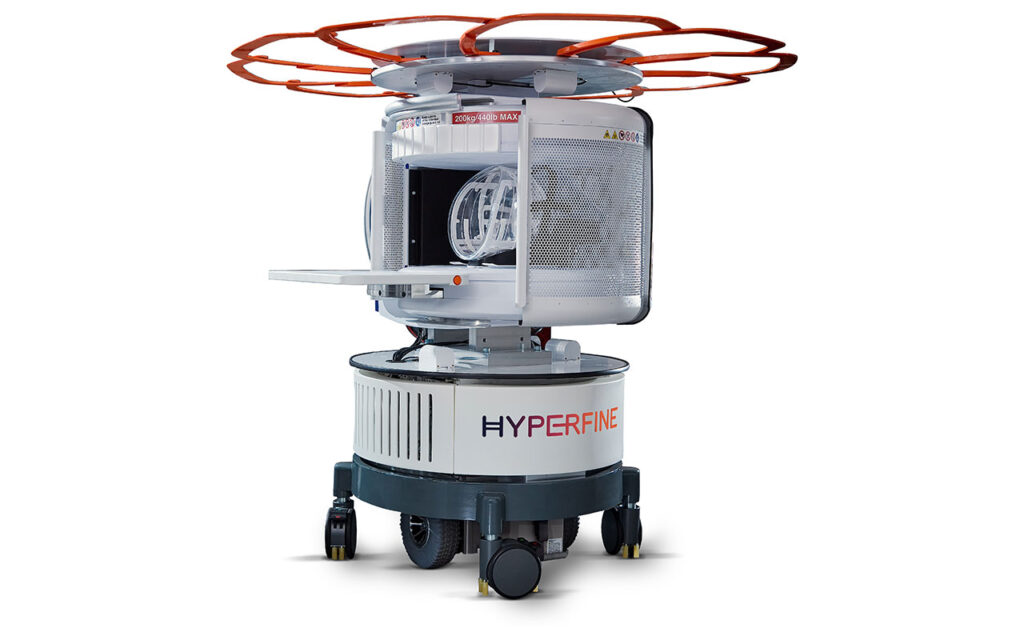
The collaboration between Hyperfine and NVIDIA will focus on advancing AI-powered image reconstruction and embedding real-time clinical decision support into portable MRI workflow. By leveraging the NVIDIA advanced suite of training and inference tools, such as NVIDIA DALI and MONAI, the collaboration seeks to further improve the Swoop system’s image quality, reduce scan times, and enable faster, more reliable diagnoses.
“Our mission is to make portable brain imaging faster, more intelligent, and increasingly accessible—ultimately improving health outcomes and reducing costs globally,” said Maria Sainz, President and CEO of Hyperfine, Inc. “Partnering with NVIDIA presents an incredible opportunity to advance and accelerate our AI technology. I’m thrilled about the possibilities this collaboration brings for the future.”
For more information about the Swoop® Portable MR Imaging® system, please visit hyperfine.io.
| 1) World Health Organization. Over 1 in 3 people affected by neurological conditions: The leading cause of illness and disability worldwide. World Health Organization. Published March 14, 2024. Accessed March 13, 2025. https://www.who.int/ |
| 2) Ghotbi N, Taki M, Mehrabian F, Alavi N, Khorrami S. Artificial intelligence in stroke imaging: Advances, limitations, and future directions. J Stroke Cerebrovasc Dis. 2023;32(1):106969. doi:10.1016/j. |