

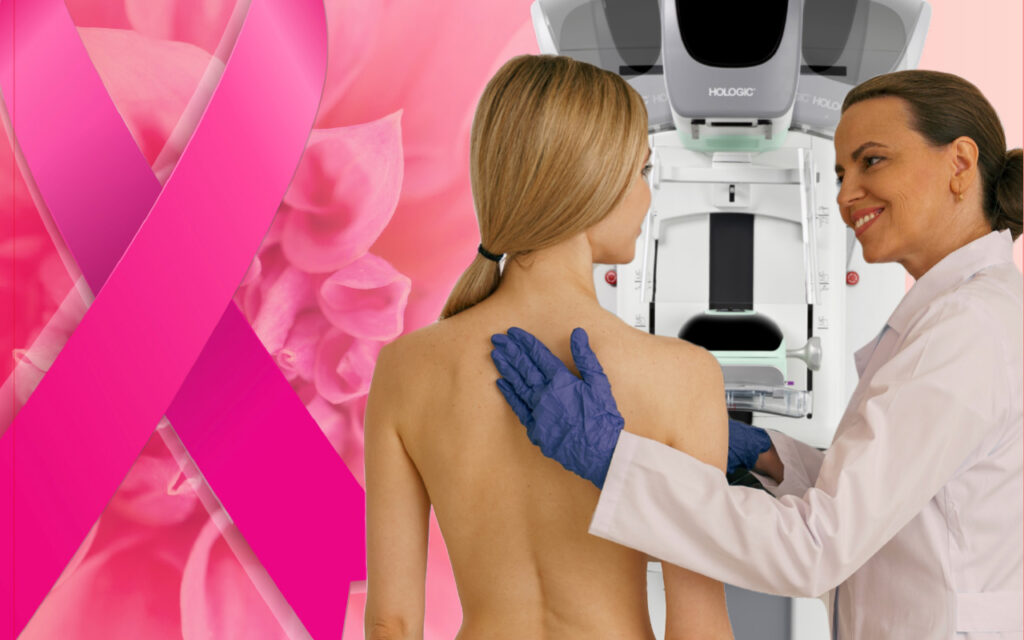
Breast cancer screening is at once one of the most significant, life-saving components of women’s healthcare, and also one of the most under-utilized, potentially difficult to access, and under-reimbursed. Finding ways to address those challenges involves advancing not only the technological solutions that underpin breast imaging modalities but the disparities in access to them.
SuccesScientific Marketing Manager for Women’s Health at Siemens Healthineers North America Karen Anderson works to connect women to the resources they need to be screened for breast cancer. Nationwide, Anderson notes that the modality she described “the number-one gold standard in mammography” – digital breast tomosynthesis (DBT), or 3D mammography – is still not universally available.
“We’re getting there, but not all facilities have that,” Anderson said. “Some of those facilities still are not caught up, either for funding, or the ability to provide those types of tests for all people in their community.”
Another consideration that affects screening rates is geography, and – notably in 2025 – the political climate. About four to six times per year, Siemens Healthineers partners with local healthcare organizations to conduct mobile mammography outreach in communities across the country. Those initiatives can find varying degrees of success depending upon the amount of trust that residents have in the process.
This year, Siemens Healthineers made a significant push to provide mobile mammography outreach for women in w, Texas, advertising a five-day screening event on local news channels, flyers in area businesses, and through community partners. However, some people feared that it was a pretense for immigration enforcement, and called asking whether the event was legitimate.
“[We heard] ‘Is this real? Is this an ICE raid?’” Anderson said. “When you have women in these communities, especially what’s going on today, they are concerned. I never would have thought about that in a million years.”
Ultimately, the outreach initiative brought in 100 women for screening – about half of the figure that it had intended to reach. Eighty percent of those who were screened had never had one before, Anderson said.
“I was there performing these mammograms,” she said. “It was huge to be able to provide that service for that community.”
The encounter underscored another reality of breast cancer screening – namely, that whether women are screened appropriately and consistently depends greatly upon their socioeconomic status, income level, education level, and overall degree health literacy. Perhaps unsurprisingly, lower-income patients participate in breast cancer screenings less frequently, face greater difficulties accessing such services, and don’t necessarily grasp the importance of the process to their health.
According to the National Cancer Institute Cancer Trends Progress Report, in 2023, fewer than 80 percent of American women aged 50 to 74 had received a mammogram within two years. Those numbers fell further based on income (to 71.3 percent for women at less than 200 percent of the federal poverty level) and education (to 69.9 percent for women with less than a high-school education).
If you have it in an area where there’s no transportation, they can’t get there,” Anderson said. “If they are not educated on not knowing that these events can be done, they won’t come. Then you have a lack of awareness in certain cultures and ethnic groups.
“If they are not educated about the event or not aware the event is happening, they won’t come. Finally, you have a lack of awareness in certain cultures and ethnic groups.” Then fewer individuals can be screened, therefore fewer cancers are found.
“Those things really prevent women from coming, and all we can do is continue to educate, to rally, to talk to one another to get your mom, your sister, your aunt, your friend, to get screened,” she said. “The only way we can cure cancer is to find it, and the only way you can find it is getting your mammogram.”
Working around those barriers involves developing a comprehensive knowledge of the individual, and connecting them to the entire team of medical professionals dedicated to their care.
“It takes an entire village to help women navigate this whole process,” Anderson said: “a technologist and radiologist to perform the procedure, a pathologist to diagnose the tissue sample, and a navigator or personal physician to deliver the results and the next step.”
“If you don’t have an entire team working with this, you do have so many women give up and decide I’m never going to do this again,” she said.
Dr. Rachel Preisser of the GRACE Breast Imaging and Medical Spa in Clive, Iowa, believes that the most helpful approach to understanding a patient’s cancer risk involves developing a comprehensive understanding of the myriad factors that contribute to it. As much as breast imaging technologies have continued to improve through the years – and Preisser acknowledges the emergence today of modalities that didn’t exist even 15 years ago – the physician’s understanding of patients’ breast health must become far more individuated.
“Breast imagers have always been at the forefront of technology, pushing the envelope with AI; using computer-aided detection years and years ago,” Preisser said. “We’ve always been looking for ways to improve what we do.”
When it comes to clinical approaches, however, “there’s been a huge shift,” she said.
“I want to know about genetics, family history, [breast] density, and [cancer] risk because what I recommend to a patient is going to be very different based on what I get back from that patient,” Preisser said. “As we learn more about all the different contributing factors, it’s about how we deliver that care.”
Preisser’s belief that breast care should not be delivered along a one-size-fits-all model inspired the approach that she and her partner Dr. Andrea Lamphiear developed at GRACE Physicians. There, patients are guaranteed to see a fellowship-trained breast imager to discuss their personal breast cancer risk and risk modification strategies. According to the Iowa Cancer Registry, the state has the second-highest overall cancer incidence in the country, and the fastest-rising, which underscores the importance of patient education and a personalized clinical approach to breast cancer screening.
“Programs are most effective when everyone who should be screened is being screened,” Preisser said. “In my state, it’s about 70 percent of eligible people participating. That, to me, as a breast imager, is really heartbreaking, and we have to do better.”
“We know that screening mammograms are a really effective tool,” she said. “We have reduced breast cancer death by 44 percent since 1989 because we have been getting people diagnosed earlier and getting them screened.
“It’s something that takes time,” Preisser said. “It takes interest; it takes the care providers being able to know ‘this is what I want to do.’ ”
Preisser also pointed out that systemic gender inequities in the healthcare system have also impeded women’s healthcare. The National Institutes of Health Office of Research on Women’s Health noted that, as recently as the 1970s, “few women worked in either medicine or science, and many women believed that women’s health needs were a low priority in the scientific and medical fields.” It wasn’t until 1986 that NIH policy encouraged researchers to include women in studies, and until 1993 that inclusion of women in medical research was enacted into law.
Finally, a 2021 study in Obstetrics and Gynecology, “Reimbursement for Female-Specific Compared With Male-Specific Procedures Over Time” concluded that “there is a lower relative value of work, driven by specialty-specific compensation rates, for procedures performed for women-only than equivalent men-only procedures.”
“When you are dealing with a system that does have a capitalistic component, providers aren’t being paid as much for the same complexity of care,” Preisser said. “It’s very common for women to be diagnosed with breast cancer; it’s been a little bit of a fight to get the data that we need to have evidence-based care.”
Another complication for women who are recommended to have annual screenings for breast cancer because of their risk factors is that they may not have the $1,000 to $3,000 to cover the costs of those procedures. That reality seems to conflict directly with the intention of the national breast density inform law, which was meant to direct women who need secondary screenings to contrast-enhanced mammography (CEM), or breast MRI. Preisser believes that such cost pressures eventually will lead to insurance groups reducing reimbursement rates to the point of unsustainability.
“How do we make this accessible to everyone?” she said. “We have tons of different modalities and tons of great technology. A lot of it comes down to what patients can access.”
“Contrast-enhanced mammography is so much cheaper than a breast MRI,” Preisser said, “but it doesn’t make sense necessarily because you have to spend money on all of this equipment to get started on it, and there isn’t a distinct CPT code that allows us to charge for the procedure. You lose money every time you do one, and it takes a lot of time.”
Dr. Richard Reaven, a practicing radiologist with Advanced Radiology in Baltimore, Maryland, and a consultant on the advisory board for breast CT manufacturer Koning, also believes that the most significant advances in breast cancer screening are built as much upon established technologies like mammography as they are improving accessibility to them.
State and federal breast density inform laws have helped women understand the distinct cancer risks associated with the density of their breast tissue, and for the nearly 50 percent of women who have dense breasts, Reaven said they should learn when to speak with their physicians about different imaging options. Each is not without its challenges.
“Ultrasound is very operator-dependent; some technologists happen to be very good at finding cancers on ultrasound, but there’s only so many of those to go around,” Reaven said. “There’s also a high false-positive rate; a lot of abnormalities that are found that end up being benign are not going to change the clinical outcome of that patient.”
“MRI is a cross-sectional, three-dimensional modality, and that’s an advantage,” he continued. “It can be really helpful in finding three-dimensional tissue abnormalities. The disadvantage is that MRI is incredibly expensive compared to mammography, and requires massive equipment. Getting on the schedule for a breast MRI can be problematic, and there are only so many MRIs in the country.”
“I do think that dedicated, low-dose breast CT is one of those things that can really be a helpful tool when it comes to imaging the breast,” Reaven said. “It’s a 3D modality; we can absolutely see things in three dimensions that we cannot with traditional mammography or tomosynthesis. It is not reliant on compression, making it a much more comfortable examination. As more and more women hear about this as a potential option, I think they’ll respond positively to it, because it really does offer a truly 3D examination.”
One of the key factors that drives the advancement of breast cancer screening technologies is clinical research, and the anticipated results of several, major national studies are expected in the coming years. Projects like the Tomosynthesis Mammographic Imaging Screening Trial (TMIST), the Women Informed to Screen Depending on Measures of Risk (WISDOM) study, or the 2023 study, “Estimating Breast Cancer Overdiagnosis After Screening Mammography Among Older Women in the United States” all hold weight in the evolution of evidence-based screening approaches.
Mark Horvath, president of the breast and skeletal health solutions division of Hologic Inc. of Marlborough, Massachusetts, said that studies like these contribute significantly to the development and advancement of breast cancer screening modalities.
“It’s an exciting time to see national and international studies like TMIST and the WISDOM study investigating topics that are also key focuses for Hologic – particularly, 3D mammography and individual risk factors,” Horvath said. “These studies help inform our product development and support the clinical value of our technologies.”
Other data sources play a factor, too. Breast density inform laws underscore the value of 3D mammography in helping to detect cancer in women of a variety of breast densities.
“We are proud to have been one of the pioneers of 3D mammography, and are continuing to develop and improve our technology to support patients with dense breasts and ensure they get the best care possible,” Horvath said.
Manufacturers like Hologic further anticipate that 3D mammography, like many imaging modalities, will be further augmented with artificial intelligence (AI) driven technologies, which may help improve early breast cancer detection rates, or clarify mammogram interpretations.
“AI represents a wealth of possibilities and is one of the most significant advancements in breast imaging since digital breast tomosynthesis,” Horvath said. “AI has elevated 3D mammography by leaps and bounds, transforming what we can see and how efficiently we can see it.”
“At Hologic, we’re investing in and integrating AI capabilities that can flag suspicious areas on an image, prioritize urgent cases, and support radiologists in making more confident decisions,” he said.
Finally, some of the work that may advance the cause of breast cancer screening isn’t based in technology at all. Horvath described a public education campaign that Hologic launched during Breast Cancer Awareness Month last year aimed at clarifying misconceptions around preventive screening exams.
“Some myths from patients included thinking that eating healthy and exercising regularly eliminates breast cancer risk; that they were too young to worry about breast cancer; and that mammograms were painful and could cause dangerous radiation exposure,” Horvath said.
“Through the campaign, we shared facts and research busting those myths, shed light on breast density, and outlined what women of different age groups can expect from their annual well woman exam. We also included a mapping tool to allow patients to find where they could get a Hologic mammogram near them,” he added.
Hologic continued its “Bust the Myth” campaign with new information in October 2025.
Whether any or all of these analog and technological approaches will help to drive down breast cancer deaths will rely upon their accessibility and availability to women of all financial means, cultural backgrounds, and levels of education. The work of finding innovative solutions to achieve these ends doubtless must persist.