
 As diagnostic imaging systems continue advancing in sophistication, connectivity, and performance expectations, the technical demands placed on imaging service professionals grow accordingly. Today’s service responsibilities require an understanding of system design, operating behavior, diagnostics, performance verification, and safety – not simply procedural familiarity. Training quality directly influences the ability to sustain up-time, manage life cycle performance, and support patient care.
Since 1985, RSTI has maintained a training philosophy centered on relevance, technical integrity, and real-world readiness. Imaging systems evolve; effective training evolves with them.
Investing in Systems to Support
Real-World Readiness
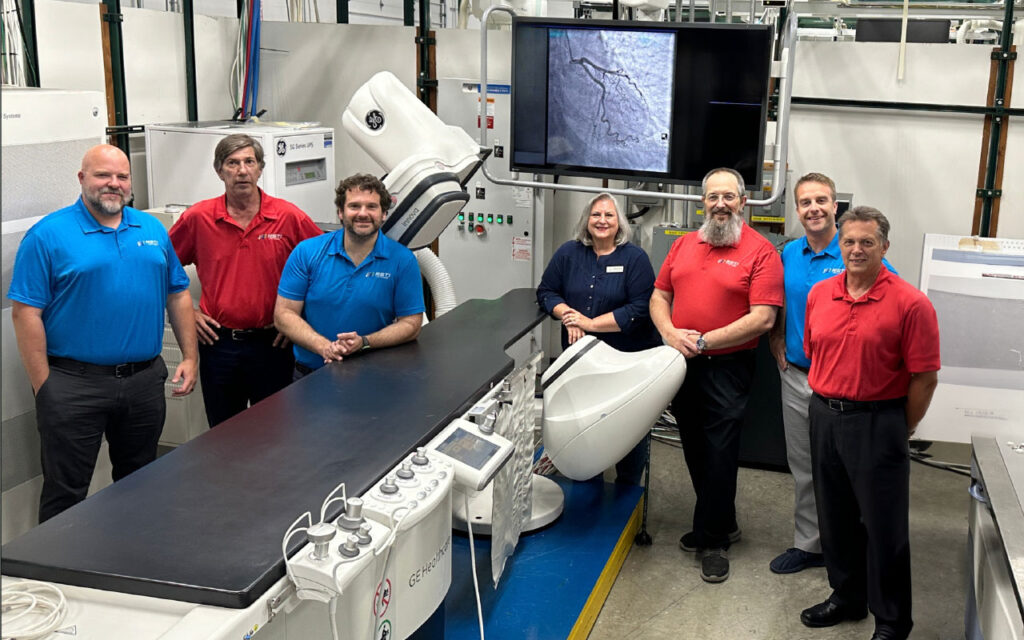
To prepare service professionals for current healthcare environments, RSTI continually invests in acquiring and maintaining the systems that technicians actively support in the field. These platforms are fully operational and used to teach servicing, diagnostics, maintenance, repairs, and verification in conditions that reflect real experience.
Recent additions include: Philips Azurion, Siemens Artis Q, Philips Ingenuity CT, GE Pristina 3D Tomosynthesis Mammography, GE 450W MRI Platform (covering GE Signa, Optima, and Discovery MRI Family including 450W/750W, Voyager, Architect, Artist, Creator, Explorer, Star, Aviator), Siemens Force CT
Supporting these systems also requires investment in infrastructure such as power delivery, cooling, RF considerations, networking environments, safety systems, and specialized diagnostic tools. The intent is simple: match the technical reality of the field so training aligns with what professionals encounter every day.
CURRICULUM DISCIPLINE AND TECHNICAL ACCURACY
Imaging platforms continually change through design evolution, software revision, and updated performance expectations. Training must therefore remain current, disciplined, and technically accurate. RSTI conducts ongoing curriculum review to ensure material reflects present technology conditions and real service requirements.
Core curriculum priorities include:
• maintaining accuracy in system architecture content
• integrating relevant failure scenarios and service lessons
• aligning maintenance and verification practices with current standards
• refining troubleshooting methodologies to support efficient diagnostics
• upholding safety, compliance, and performance expectations
Training structure is deliberately progressive: understanding how systems function, examining subsystem interaction, applying diagnostics, executing maintenance and repair, and validating performance. The outcome is readiness supported by comprehension —rather than reliance on procedural repetition.
 HANDS-ON ENGAGEMENT AND THE VARK LEARNING APPROACH
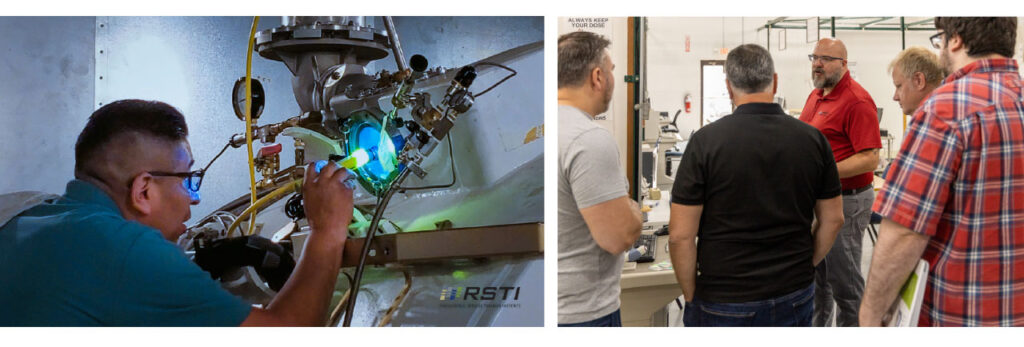
RSTI treats hands-on activity as essential. Imaging service responsibilities involve tactile procedures, analytical decision-making, adjustment, alignment, testing, and QA verification – skills that develop through direct engagement.
To support learning effectiveness, RSTI reinforces training through the VARK learning approach: Visual – system schematics, diagrams, and performance visualization, Auditory – guided explanation and collaborative discussion, Reading/Writing – technical documentation and structured reference learning, and Kinesthetic – applied, hands-on system interaction.
This combination improves retention, strengthens comprehension, and builds confidence when transitioning from training to live service environments.
STRENGTHENING WORKFORCE CAPABILITY
High-quality training strengthens industry workforce stability as much as individual capability. As healthcare organizations continue to face staffing challenges and technology demands, structured and technically credible training is essential to sustaining service readiness.
RSTI also supports the military community as part of this broader capability effort. The organization is DoD SkillBridge™ approved and GI Bill® approved, helping transitioning service members apply their technical backgrounds toward imaging service careers.
Todd Boyland, CEO of RSTI Training, describes the responsibility clearly:
“Our industry relies on imaging systems performing exactly as designed. To support that responsibility, service professionals deserve training built on real equipment, real experience, and curriculum that reflects the systems in the field today. That commitment guides every decision we make.”
CONTINUED COMMITMENT
CT platforms continue advancing in speed, efficiency, and image computation. MRI systems evolve in RF behavior, gradient capability, and software environments. Interventional, fluoroscopy, and mammography systems integrate increasingly sophisticated control and quality systems. Across modalities, technical complexity and integration continue to expand.
Meeting these realities requires training environments grounded in: continual system investment, disciplined curriculum maintenance, structured learning design, meaningful hands-on participation, sustained commitment to workforce capability. This remains RSTI’s standard.