
Sponsored by RSTI
The imaging workforce gap is no longer a future concern – it is a present operational reality.
Across healthcare systems, imaging departments are facing increasing pressure. Modalities are more advanced than ever. Artificial intelligence integration, hybrid systems, and evolving software platforms demand deeper technical expertise. At the same time, many experienced imaging engineers are approaching retirement, and fewer professionals are entering the field with modality-specific training.
The result isn’t just a staffing challenge. It’s a financial and operational one.
Imaging departments are significant revenue drivers for hospitals and outpatient centers. When equipment is down, patient throughput slows. Delays ripple across departments. Reliance on external service providers increases. Service contracts tighten budgets. Downtime becomes more than an inconvenience – it becomes a measurable cost.
Consider a common scenario. A CT system goes down midweek. The in-house team can perform basic diagnostics but lacks modality depth to isolate the root cause. An OEM visit is scheduled. The earliest availability is two days out. Patients are rescheduled. Staff overtime increases. Revenue is deferred. What could have been resolved internally in hours stretches into days – not because of effort, but because of training gaps.
The workforce gap carries a price.
But so does solving it – and the return on that investment is substantial.
Forward-thinking healthcare organizations are shifting from reactive staffing models to strategic workforce development. Instead of simply filling roles, they are building capability. Cross-training biomeds into imaging. Developing in-house modality depth. Creating succession plans that anticipate, rather than respond to, retirements and turnover.
Education is no longer optional. It is infrastructure.
For over four decades, the imaging service industry has evolved dramatically. Since 1985, training has moved from analog systems to fully digital platforms, from single-modality focus to multi-vendor, multi-modality ecosystems. Yet one principle remains constant – engineers who understand systems at a deeper level reduce downtime, increase confidence in the field, and strengthen operational stability.
Investing in education directly impacts:
- Faster troubleshooting
- Reduced dependence on OEM service contracts
- Increased in-house service capability
- Stronger employee retention and career progression
Organizations that prioritize structured, hands-on education are not simply improving skill sets – they are protecting revenue and improving patient care continuity.
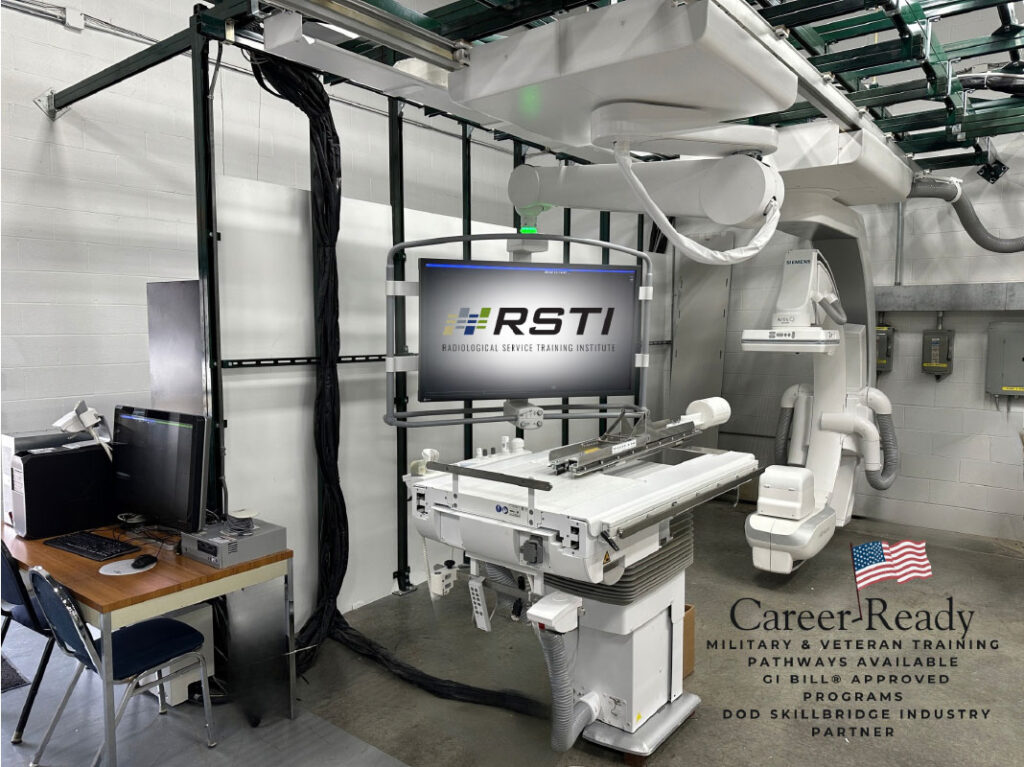
Workforce development also means expanding the pipeline itself. Transitioning military professionals into imaging service roles through approved GI Bill and SkillBridge programs provides a disciplined, technically capable talent stream. Supporting biomeds who want to advance into imaging creates upward mobility within existing teams. Multi-vendor exposure ensures engineers can adapt as technology evolves.
The workforce challenge is real. But it is solvable.
This year, RSTI president, Todd Boyland has been recognized as Educator of the Year at the 2026 TechNation TechChoice Awards. The honor reflects more than individual achievement. It represents a long-standing commitment to raising the standard of imaging education and mentorship within the healthcare technology management community.
Excellence in education does not happen by accident. It is built over time – through experience, adaptability, and an unwavering focus on developing engineers who are prepared for real-world complexity.
As imaging systems continue to advance, the gap between minimal training and true technical mastery will widen. The organizations that invest intentionally in education today will be the ones best positioned for stability tomorrow.
Closing the imaging workforce gap does not begin with a job posting.
It begins with education. •
Learn more at rsti-training.com.