
Sponsored by AllParts Medical
CT scanners offer some advantages compared with other imaging modalities. CT is often a preferred choice in many clinical settings. These imaging devices create high-resolution, cross-sectional images of the body, allowing for detailed examination of internal structures. CT scans are faster and more comprehensive than traditional medical X-ray and capable of capturing images of bones, soft tissues and blood vessels simultaneously.
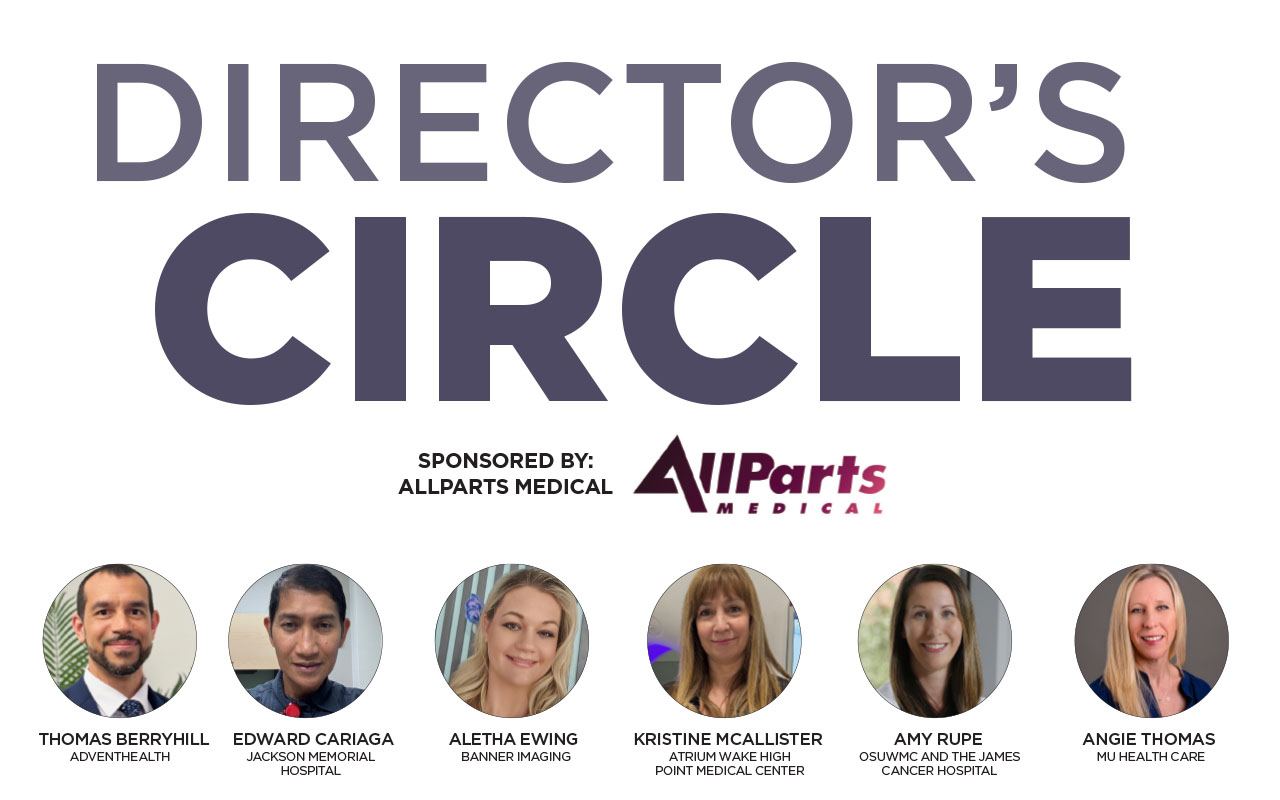
In this month’s Director’s Circle, imaging leaders share their expert insights and thoughts on CT trends, challenges and innovations.
Participants in the Director’s Circle are:
- AdventHealth CT Modality Manager Thomas Berryhill, BS, MIRS (R)(CT)(ARRT);
- Jackson Memorial Hospital Associate Director of Radiology Services Edward Cariaga;
- Banner Imaging Associate Director Aletha Ewing;
- Atrium Wake High Point Medical Center Imaging Supervisor, CT & IR Kristine McAllister;
- OSUWMC and The James Cancer Hospital Imaging Manager Amy Rupe; and
- MU Health Care Radiology Supervisor-CT Angie Thomas.
Q: What advancements in CT technology have made the most significant impact in improving patient care and diagnostic accuracy?
Berryhill: The short answer, AI. Today’s top CT manufacturers have adopted the use of AI into standard workflows, making scanning more efficient, at the same time, providing quality diagnostic images. From automating precise patient positioning with the help of infrared technology via a camera to automating volume rendering technique (VRT) reconstructions, these advancements allow technologists to maintain focus on patient care, ultimately increasing efficiency and patient safety.
Cariaga: Speed and spectral imaging primarily for stroke, trauma and cardiac studies
Ewing: Higher-resolution imaging, thanks to better detectors and improved spatial resolution, has made a big difference in detecting smaller lesions, fine fractures, and is especially helpful for spotting early signs of cancer and heart disease. Also, combining cardiac CTA and FFRCT technology has really improved patient care. Together, they allow doctors to assess the coronary arteries non-invasively, so they can better understand the severity of blockages and make more informed decisions about treatment – often avoiding unnecessary procedures. Finally, low-dose scanning has come a long way. Thanks to advances in technology, it’s now possible to perform scans with much lower radiation, which is especially important for screening exams like lung cancer screenings, keeping patient dose low without sacrificing accuracy.
McAllister: There have been so many improvements in CT technology over the last few years, but I think the biggest improvement is faster scan times with lower dose. This is something our patients do not realize, but when we explain to some of our more curious patients, it is exciting to tell them the amazing image quality we are giving their provider, with a much lower dose. Faster scan times with improved image quality and lower dose going hand in hand is a huge advancement. We can scan patients in a fraction of the time compared to prior CT scanners not long ago. Some scans take only 1-2 seconds to complete. That’s a few hundred images in 2 seconds! Plus, the quality difference is amazing! This plays a big role in scanning organs that you cannot make hold still, such as the heart. Cardiac imaging is one of the biggest improvements in detail that I have seen. The detail is so great that we can diagnose each vessel to the heart for high-risk heart disease. Some cardiac CT scans use software that utilizes AI for reconstructing part of the images. That makes for a quicker and more accurate diagnosis. These patients can then go to a cardiologist for further workup that could potentially save their life from a major heart event such as a heart attack. All with a CT scan that took less than 5 minutes of their time and very little radiation dose. I am also very excited knowing we are lowering dose significantly on pediatric patients as well. Plus, with the speed of the CT scan, there are fewer repeat imaging needs and increased diagnostic accuracy. All of these advancements improve accuracy and patient care tremendously.
Rupe: The ability to perform faster CT scans with improved image quality and lower patient dose has enhanced patient satisfaction and increased physician accuracy in their reports. We also utilize dual-energy imaging for advanced post-processing applications. For example, emergent patients who have already received contrast and require additional imaging can be scanned sooner without concern for contrast contamination.
Thomas: The introduction of naetom alpha photon counting technology has improved imaging by offering high-resolution images at minimal dose.
Q: What are your thoughts on the use of low-dose CT scans in routine practice, and how are you balancing patient safety with diagnostic efficacy?
Berryhill: Current state, low-dose lung screenings are offered at multiple organizations throughout the U.S. and have been successful in detecting lung cancer in patients with a history of smoking. For low-dose lung screening, patients are required to meet certain criteria, which helps target patients that may be more susceptible to having lung cancer due to an extensive history of smoking. This helps mitigate over-usage, overall, decreasing radiation exposure to the patient. By collaborating with our team of physicist and radiologist, dose and image quality are monitored to ensure images are of diagnostic quality, at the same time, patients receiving lower doses of radiation.
Cariaga: Low-dose for pediatric population and cancer patients are great practice. With the correct parameters, this will reduce radiation exposure while maintaining high diagnostic quality.
Ewing: I think it’s great that we can offer low-dose CT exams for the early detection of lung cancer. This simple test can truly change the outcome of a patient’s diagnosis if the cancer is caught early. Of course, there’s always a balance to strike between patient safety and diagnostic accuracy. Thanks to advancements in CT technology, we can now get high-quality images while using a lower dose of radiation. To ensure we’re prioritizing safety, it’s important that patients meet the lung screening criteria, and we shouldn’t be imaging those who don’t fit the criteria. This way, we’re helping the right patients while keeping them safe.
McAllister: Low-dose CT scans are a huge benefit to our community. For example, a low-dose CT lung scan can be done at a low cost and has helped many patients find lung cancer that they may not have otherwise known about until they started to develop symptoms. We have a process in place that screens patients first to make sure they qualify for this low-cost program. They are very diagnostic and very low radiation dose. We have specific protocols in our scanners that ensure low dose and high detail. These images are sent to a specific radiologist that flags it as a low-dose screening, which ensures accuracy. A lung cancer can be caught in the early stages, allowing for a much higher survival rate and longevity of life.
Rupe: We use various dose modulation techniques on our scanners to ensure the lowest possible dose for each protocol. By collaborating closely with our imaging physics department and radiologists, we maintain the right balance between minimizing radiation exposure and preserving diagnostic image quality.
Thomas: For pediatric patients we have achieved diagnostic quality images at a minimal dose using the alpha scanners. For adult patients there are certain protocols that can produce diagnostic quality images while keeping dose well below acceptable levels. We work closely with our medical physicists and radiologists to ensure our scans are at a diagnostic level, while minimizing the patient dose.
Q: Given the ongoing staffing shortages in radiology, what strategies have you implemented to ensure that CT services remain efficient and effective?
Berryhill: We’ve recognized that the radiology staffing pipeline starts with X-ray students. By partnering with our surrounding colleges and universities, we’ve advocated for increases in class sizes, resulting in an increase in X-ray students completing clinicals within our organization, ultimately growing the pool of potential candidates for hire. Once employment is established, growth within the organization occurs with a blended format of cross-training and completion of the CT Registry. Getting CT technologists in our doors is only half the battle, retaining them is key. By providing competitive pay, an array of organizational benefits and growth opportunities, we are, not only able to retain staff, but also create an environment for career growth within the organization.
Cariaga: Staffing flexibility and staggering radiology services to other system facilities. Collaboration of other system company to hybrid staff within the system. Hiring of premium pay (agency) staff if needed.
Ewing: We’ve really focused on improving efficiency and streamlining our workflow to keep things running smoothly. To support our techs, we’ve brought in extra help, and we have teams dedicated to handling revised orders and reviewing schedules ahead of time. This allows us to gather labs when needed and ensure everything is scheduled properly. We try to be proactive, rather than reactive, to avoid any delays or issues in the department. We also have imaging assistants working alongside the CT technologists to keep the schedule moving seamlessly throughout the day. To address the tech shortages, we’ve implemented cross-training programs and focus on training from within the company. This provides RTs with great opportunities to advance in their careers while allowing us to grow our own pool of skilled CT technologists. It’s a win-win for both the team and the department.
McAllister: Employee satisfaction is a huge key to retention. We are a department that is very in tune with our staff. We, as leaders, make sure we are visible and are ready and willing to step in to help our staff. We listen to the needs of our staff. We have implemented many scheduling changes to support staff needs and satisfaction, including creating 4 10-hour shifts instead of 5 8s, for example. We have used travelers when necessary to ensure complete coverage and lessen staff stress. We believe work-life balance is very important.
Rupe: We’ve used agency staff to support our full-time team during the ongoing nationwide shortages. Additionally, we reinstated our imaging student Intern program, giving technologists an extra set of hands for a two-person safety model while scanning. This past year, we also introduced patient care associates into our CT spaces to help with non-scanning tasks, allowing technologists to focus more on imaging and patient care.
Thomas: We have had to utilize travel technologists to fill in the staff shortages to keep up with patient volume and still maintain optimal patient turnaround times. Creative scheduling has allowed me to overlap shifts with the staff we have.
Q: How do you handle the balancing act between budget constraints and the need for advanced CT technology and equipment upgrades?
Berryhill: With prices of CT machines ranging from $600K to $2M, there are a wide range of different CT scanners from several different manufacturers. Working closely with our contracted vendors provides us with the opportunity to tailor our equipment based on demographics and the services being provided at that location. One of the advantages of working at such a large organization is the ability to obtain optimal pricing through “bulk buy” offerings, as well as software upgrades and add-ons for our equipment. This is a huge win for our organization and helps us procure the most advanced CT equipment on the market today.
Cariaga: It has been challenging but so far, we have managed well in our facility. We have purchased top of the line equipment and replaced some of our old fleet of equipment without any issue. Some old equipment will be replaced soon.
Ewing: Balancing budget constraints with the need for advanced CT technology and equipment upgrades is a challenge, but we approach it strategically. We focus on prioritizing needs versus impact. For example, if we have two CT scanners in proximity, we evaluate whether both need the same scanning capabilities, or if it makes more sense to offer certain services, like coronary imaging, at just one site. We also implement upgrades in phases, creating a timeline for equipment replacement based on factors like age, exam requirements and usage. This helps us spread out the financial impact over time, ensuring that we’re making thoughtful decisions that align with both patient care and budget limitations.
McAllister: This is always a hard task for any business. Fortunately, we have a great leadership team that is very good at budgeting and prioritizing. With the advancements in CT, it is easier to justify the cost at first with the long-term benefits. A newer, more advanced CT machine equals additional new studies and offerings of procedures that we wouldn’t have had prior to the new equipment. That brings in more volume. We are adding new exams that we couldn’t offer before, and we can increase our volume due to the speed of the machine compared to the older technology. That, in turn, boosts the budget in itself. Adding multiple appointment slots to the schedule every day definitely increases the budget and helps satisfy the community needs by getting patients in faster so they can make a healing plan.
Rupe: We’re fortunate to have recently signed an agreement with one of our vendors, ensuring we stay up to date with the latest imaging equipment. This agreement gives us the opportunity to collaborate closely with our vendor, bringing in new ideas and implementing the latest technology to enhance our imaging capabilities. Additionally, we have a facilities imaging equipment specialist to oversee equipment purchases and have developed a 10-year plan for future upgrades.
Thomas: We are very fortunate at our facility that our equipment is maintained and upgraded when needed. We do the very best we can at minimizing overtime for staff to help keep costs down. Our patient volumes are high enough, that our productivity is always kept under budget.
Q: How are you addressing the growing demand for faster and more efficient CT scans while ensuring a positive patient experience?
Berryhill: Piggybacking off my previous answer regarding AI. The use of AI increases efficiency and throughput, while providing the opportunity for our technologists to maintain patient-centered care. Additionally, working with our internal IT and EMR build team to optimize workflows, helps streamline processes within the department. Interdepartmental collaboration within the organization is key to success, not only in terms of being more efficient, but also in providing a positive patient experience. Taking a “one team” approach that, ultimately, includes multiple different departments (nursing units, ED, etc.), provides the opportunity for collaborative work that our patients experience during their visit.
Cariaga: Time management and staff continuous competencies. Assigning a great leader to navigate the daily demand.
Ewing: This requires a mix of streamlined processes, advanced technology and clear communication. Thanks to recent advancements in CT, we’ve upgraded to faster and more efficient scanners. These new machines not only reduce scan time but also improve efficiency on the back end with features like auto-reconstruction and quicker, user-friendly MPR capabilities. We’ve also streamlined workflows to give staff more time to spend with patients, minimizing bottlenecks and ensuring everything runs smoothly. Communication plays a huge role in ensuring a positive patient experience. We make sure patients are fully informed about what to expect before, during, and after their scan, which helps reduce anxiety and keeps them at ease. Our staff is always available to answer questions or offer reassurance, ensuring patients feel comfortable and well taken care of. Lastly, while speed is important, patient comfort is just as critical. When patients are comfortable, not only do we improve image quality (since they’re less likely to move during the scan), but we also make their overall experience much more positive.
McAllister: Our community hospital is a very busy one. We understand that our patients need their scan done ASAP for multiple reasons. We strive for the best possible patient experience. We, as technologists here at High Point, get excited about new technology, and it shows in our patient care. Even though our hospital is not as big as our larger partners in our network, we strive to have the best and most up-to-date technology. We have adjusted our appointments to be earlier in the day and later in the afternoon to help accommodate our patients’ busy schedules. Patient satisfaction is a very high priority and something we take pride in.
Rupe: Safety is a top priority at our facility, both for patients and staff. Balancing staffing and scheduling for outpatient and inpatient exams is always a challenge, but we’re committed to getting it right. We continue working with our EPIC team to refine internal processes, helping staff manage schedules efficiently and ensuring we have the right coverage to maximize scanner usage.
Thomas: My staff and I are always focused on providing our patients with the highest level of care, regardless of the length of the scan or how long they are in the CT department. It is quality over quantity. It doesn’t matter how long a patient is with you, if they are treated well, they will have a positive experience.
Q: What else would you like to share with ICE readers regarding CT?
Berryhill: Technology is continuously growing. CT scanner manufacturers are developing new ways to increase efficiency by advancing AI software, decreasing radiation dose and increasing diagnostic images all together. I’m excited to see what the future holds, not only in CT, but radiology as a whole.
Ewing: One thing I’d like to highlight is how far CT technology has come in improving both patient care and workflow efficiency. It’s not just about getting faster scans – it’s about achieving better, more accurate images with less radiation, ultimately leading to more personalized care. CT plays a critical role in early diagnosis, especially in areas like cancer detection, cardiac imaging and trauma, where timing is essential. As CT continues to evolve, it’s important for the industry to stay adaptive and forward-thinking. We need to embrace new technologies and methods that enhance our ability to diagnose, treat and care for patients while balancing costs and maintaining quality. The future holds a lot of promise, and it’s exciting to be part of a field that’s constantly advancing.
McAllister: Most people don’t realize everything that goes into being a CT technologist. We, as technologists, must have a lot of knowledge. The running joke is that we are “button pushers.” We have to know how to operate a multi-million dollar scanner and troubleshoot it when it has issues; understand anatomy, physiology, and pathology because if we see something abnormal, we need to know if it’s something we have to keep the patient for or call a doctor to expedite; be able to start IVs better than anyone in the hospital because without their IV, they don’t get a scan sometimes; be able to ensure safety and comfort for our patients, including being a radiation safety expert; try to reason with a 2-year-old to lay still on this hard, cold table so you can scan them for an important diagnosis; know all the risks and contraindications of administering contrast and be ready for a contrast reaction that would require life-saving measures; be a good listener knowing you have 8 more patients waiting to be done; be able to hide your facial expression when you find a cancer but can’t tell them because they have no idea; plus, the ones that just found out they have cancer and you’re the first person they have come face to face with since they were told the news. It’s not an easy job, and it takes a special person to fill those shoes. So next time you or someone you love has a CT scan, know that we’ve got you, and you’re in good hands.
Rupe: We’re excited to start exploring photon counting CT scanners in the coming year and finding ways to implement this cutting-edge technology within our institution.
Thomas: I have been in radiology for over 30 years and have seen lots of trends, both positive and negative. At the core of it all is having great people on your team. I have always said I can dig a ditch if I enjoy the people I’m digging the ditch with. That is true for any profession. I am so lucky to have an amazing group of people that are committed to helping not only our patients, but each other.
This month’s article was sponsored by AllParts Medical. For more information on this company, visit Allpartsmedical.com.