
Here’s a scene that plays out in pediatric imaging departments every day: a five-year-old walks into the MRI suite, takes one look at the machine, and melts down. The parents are stressed. The tech is behind schedule. And everyone knows that if the kid can’t hold still, you’re looking at motion artifacts, repeat scans, or a call to anesthesia.
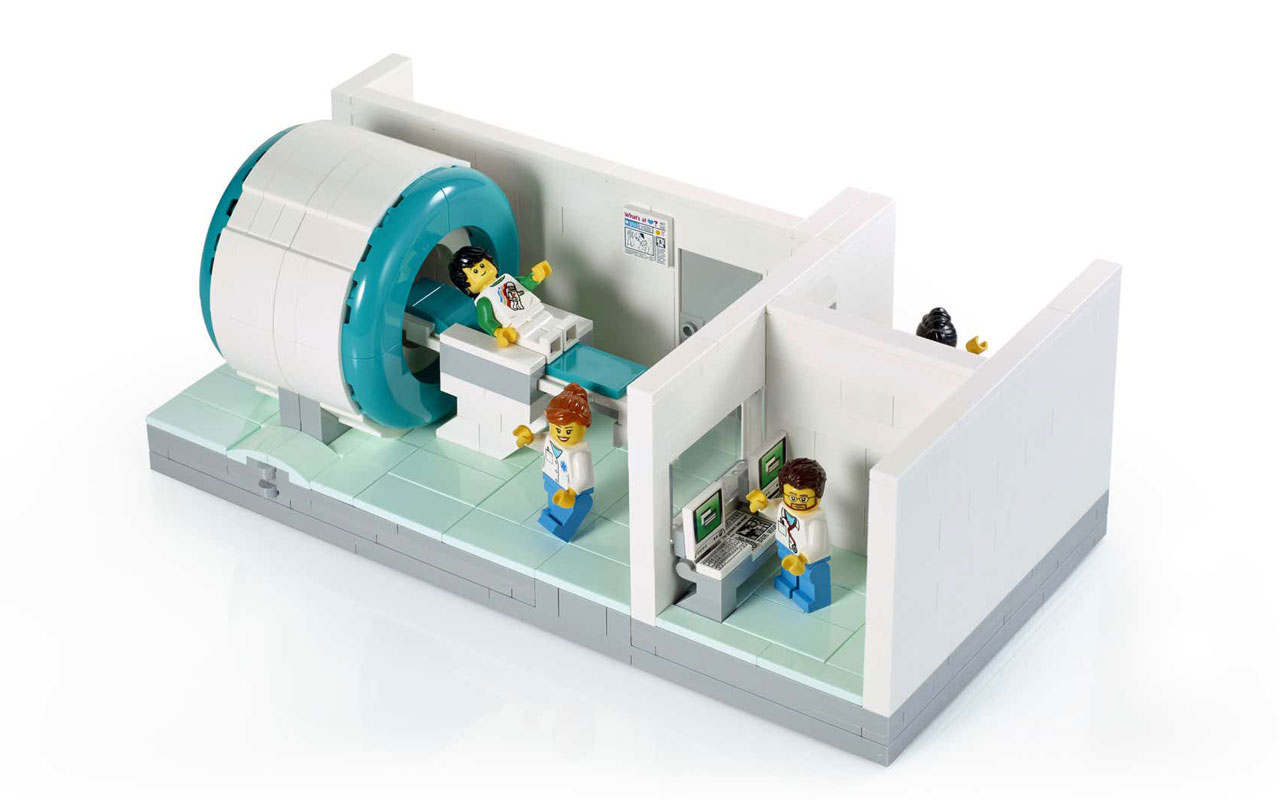
Now picture a different version. Same kid, same MRI suite, but twenty minutes earlier, a child life specialist sat down with them in the waiting area and pulled out a LEGO set. Not just any set. A miniature MRI scanner, complete with a patient minifigure on a sliding table, technologists operating the controls, and parents sitting in a little waiting room. The kid built it, played with it, asked questions about it. By the time they walked into the real scan room, they’d already done this once.
That’s the idea behind LEGO’s MRI Scanner set. It’s not sold in stores and can’t be ordered online. LEGO donates it exclusively to hospitals and health settings around the world through partners like the Starlight Foundation, Fairy Bricks, and United Way.
The numbers are hard to argue with
Since 2023, the program has supported more than a million children with their scans across hospitals on four continents. LEGO surveyed 450 healthcare practitioners who’ve used the set, and the results are striking. Ninety-six percent said the model helps reduce children’s anxiety. Ninety-five percent said it improves the family’s overall hospital experience. And here’s the one that should really get your attention: 46% reported a reduced need for sedation or general anesthetic.
Think about what that means operationally. Nearly half of practitioners are seeing fewer kids go under. That’s fewer anesthesia consults, fewer recovery holds, and fewer of the cascading delays that come with sedation.
Why it works
The concept is pretty simple. Kids are scared of things they don’t understand, and an MRI machine is about as alien-looking as medical equipment gets. Playing with the LEGO version beforehand lets them get familiar with the process on their own terms. They see where the patient goes, how the table moves, what the technologists are doing. It takes the mystery out of it, and that goes a long way toward keeping them calm when the real thing happens.
Traci Aoki-Tan, a certified child life specialist at Kaiser Permanente Roseville, described the effect simply: when they walk into a room carrying the LEGO set, kids’ faces light up. Even anxious parents visibly relax. The whole mood shifts before the scan even begins.
What this means for imaging teams
If you work in HTM or imaging, you already know that scan quality starts before the patient gets on the table. We spend a lot of time thinking about coils, sequences, and protocols, and we should. But patient prep matters just as much, especially with kids. A relaxed child is far more likely to hold still, which means cleaner images and fewer do-overs.
The sets are donated for free. If your facility does pediatric imaging and hasn’t connected with one of LEGO’s distribution partners yet, it’s worth a conversation. More information is available on LEGO’s website.