

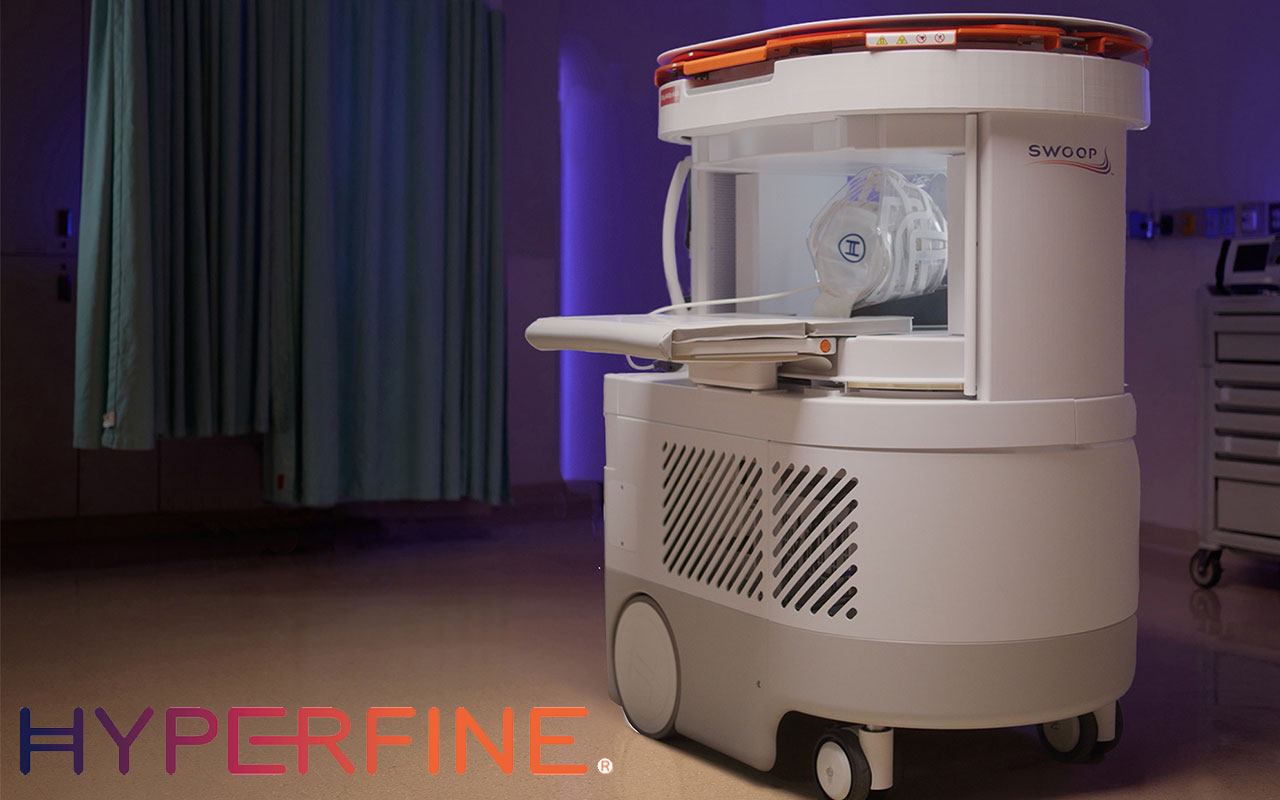
Hyperfine Inc., the health technology company that has redefined brain imaging with the first FDA-cleared AI-powered portable MRI system for the brain – the Swoop system – has announced the formation of a neurosurgery advisory council, a multidisciplinary group of leading neurosurgeons who will provide expertise to help inform the potential role of portable ultra-low-field MRI in neurosurgical applications and shape the future of imaging in neurosurgical care.
“The neurosurgical setting is becoming an important site of care for accessible imaging, where traditional MRI has intrinsic limitations. The Swoop system may open up new possibilities for integrating imaging directly into surgical workflows,” said Hyperfine Chief Operating Officer Tom Teisseyre. “Providing access to imaging at key moments around a procedure may help clinical teams make better informed decisions, improve efficiency, and ultimately advance how surgical care is delivered.”
The neurosurgery advisory council brings together distinguished neurosurgeons from leading academic medical centers and community hospitals around the world, representing expertise in craniotomy, endovascular neurosurgery, transsphenoidal surgery, tumor resection, and other complex procedures. Together, members will help evaluate the potential role of the Swoop system across the neurosurgical continuum – from preoperative planning and intraoperative decision-making to postoperative monitoring and discharge. The council will provide strategic clinical guidance on workflow integration, product development, and evidence generation while sharing real-world experience that may help define best practices and expand the clinical utility of portable MRI across neurosurgical subspecialties.
“The neurosurgical community has long recognized the value of intraoperative MRI, but access has been limited by the substantial infrastructure requirements, cost, and workflow demands of having a high-field MRI system in the OR,” said Edmond Knopp, MD, Chief Medical Officer of Hyperfine. “Portable, ultra-low field MRI has the potential to fundamentally change how and where imaging is used throughout the neurosurgical care pathway. Through collaboration with leading experts in the field, we aim to accelerate its integration into clinical practice and maximize its impact on surgical decision-making and patient care.”
The initial members include:
- Hakan Emmez, MD, Ph.D., Professor of Neurosurgery, Güven Hospital(Ankara, Turkey)
- Brian Jankowitz, MD, Chief of Neurosurgery, JFK University Medical Center (Edison, New Jersey, USA)
- Elad I. Levy, MD, MBA, FCNS, Professor and Chair, University at Buffalo Neurosurgery (Buffalo, New York, USA)
- G. Michael Lemole Jr, MD, MBA, FAANS, FACS, Neurosurgeon (Skull Base and Cranial Surgery) at Jefferson Abington Hospital; Professor, Department of Neurological Surgery at Thomas Jefferson University (Abington, Pennsylvania, USA)
- Debraj “Raj” Mukherjee, MD, MPH, Associate Professor and Assistant Residency Program Director, Department of Neurosurgery, Johns Hopkins Medical Institutions (Baltimore, Maryland, USA)
- Todd Patrick, MD, Ph.D., Chief of Neurosurgery, Christus Trinity Mother Frances Health System (Tyler, Texas, USA)
- Michael Schulder, MD, FAANS, Professor and Vice Chairman, Department of Neurosurgery, Zucker School of Medicine at Hofstra/Northwell (Manhasset, New York, USA)
- Adnan Siddiqui, MD, Ph.D., FAHA, Vice-Chairman and Professor of Neurosurgery, Jacobs School of Medicine & Biomedical Sciences (Buffalo, New York, USA)
- Julian Spears, MD, SM, FRCS(C), FACS, Head, Division of Neurosurgery, Chair in Brain Tumor and Cerebrovascular Surgery, St. Michael’s Hospital, Unity Health Toronto, Department of Surgery, University of Toronto (Toronto, Ontario, Canada)
By convening leading neurosurgeons across subspecialties and care settings, Hyperfine aims to accelerate evaluation of portable MRI in neurosurgical workflows and help expand the clinical utility of the Swoop system in this important area of care.
For more information, visit HyperfineMRI.com.