

Staff report
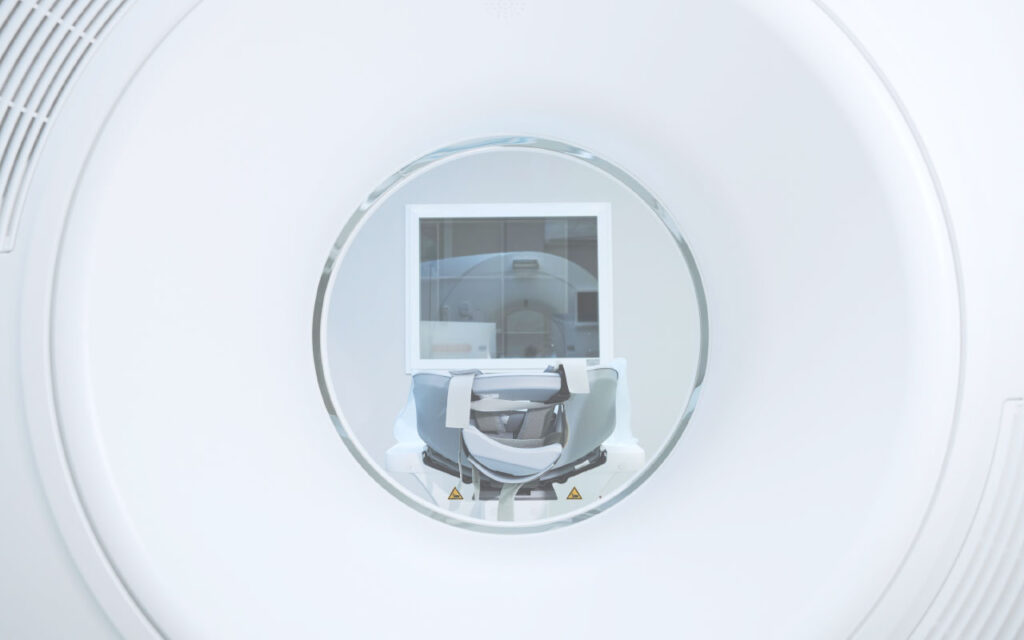
The magnetic resonance imaging (MRI) market refers to the production, distribution and use of MRI, which is a non-invasive imaging technology that produces three-dimensional, detailed anatomical images. Magnetic resonance imaging is a medical imaging technique used in radiology to generate pictures of the anatomy and the physiological processes inside the body. MRI scanners use strong magnetic fields, magnetic field gradients, and radio waves to form images of the organs in the body. It provides better soft tissue contrast than CT and can differentiate better between muscle, water, fat and other soft tissue.
According to Statifacts, the global magnetic resonance imaging (MRI) market size was valued at $1.086 billion in 2024 and is predicted to be worth around $2.619 billion by 2034, growing at a CAGR of 9.2% between 2024 and 2034. Expanding applications of MRI in clinical and research settings, ongoing technological innovation in MRI hardware and software, and demand for non-invasive and high-resolution diagnostic imaging are driving the growth of the market.
Statifacts adds that North America led the global market in 2024 and is expected to maintain its dominance because of strong healthcare infrastructure and tech investments. The Asia-Pacific region is projected to see the fastest growth from 2025 to 2034, driven by rising healthcare demands and medical advancements.
The closed system segment dominated in 2024 and is expected to retain its lead because of its safety and efficiency. The open system segment is set to gain significant market share from 2025 to 2034, thanks to its flexibility and cost-effectiveness.
The high-field-strength segment led in 2024 and is expected to remain dominant because of superior imaging precision. The midfield-strength segment is expected to grow significantly, offering a balance of performance and cost.
The neurology segment led in 2024 and is set to continue growing with rising neurological conditions and imaging advancements. The musculoskeletal segment is expected to grow at the highest CAGR, driven by demand for orthopedic and sports medicine imaging.
The hospital segment dominated the market in 2024 and is expected to maintain its position as the key end-user. The ambulatory surgical center segment is anticipated to grow the fastest due to increasing outpatient procedures.
The news release also reports the following MRI trends:
- Integration of Artificial Intelligence (AI): AI is increasingly being used in MRI systems to accelerate scan times, enhance image quality, and assist in automated diagnosis and reporting.
- Rising Demand for High-Field and Ultra-High-Field MRI: There is growing adoption of 3T and 7T MRI systems, especially in neurology and research, due to their superior resolution and diagnostic capabilities.
- Development of Portable and Point-of-Care MRI Devices: Advances in low-field MRI technology are enabling the creation of compact, mobile systems suitable for emergency, rural, and bedside applications.
- Patient-Centric System Design: Manufacturers are focusing on improving patient experience through open-bore systems, noise reduction technologies, and faster scan protocols to reduce discomfort.
- Market Growth in Emerging Economies: Increasing healthcare investment, growing awareness, and expanding diagnostic infrastructure are fueling MRI adoption in regions like Asia-Pacific, Latin America and parts of Africa.
According to Precedence Research, the global AI in medical imaging market size is calculated at $2.57 trillion in 2026 and is expected to hit approximately $22.97 trillion by 2035, expanding at a healthy CAGR of 27.57% from 2026 to 2035. The growing imaging patient volumes and strong focus on earlier detection of diseases will drive market growth.
“Increasing imaging volumes, growing chronic disease prevalence, and radiologist shortages are accelerating the adoption of AI across CT, MRI, X-ray, and ultrasound imaging. AI enables faster, more accurate diagnoses, improves workflow efficiency, and reduces clinical workload, positioning it as a critical technology shaping the future of diagnostic healthcare worldwide,” the firm states.
At the same time, healthcare providers are leveraging AI to manage rising scan volumes and mitigate a 30 to 40% global radiologist workforce gap, it adds. •