

Jeff Killion, Ph.D., R.T.(R)(QM), Dean, Professor, Robert D. & Carol Gunn College of Health Science & Human Services
By Matt Skoufalos
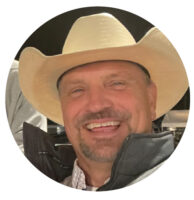
As dean of the College of Health Science and Human Services at Midwestern State University in Wichita Falls, Texas, Jeff Killion oversees seven departments – about 40 percent of the university – teaches three master’s-level education courses per year and supports the only radiology bachelor’s-degree program in the state of Texas.
Quite a come-up for an Iowa farm kid whose guidance counselor fretted that he wasn’t “college material” after high school.
From Iowa Farm Kid to a Radiologic Technology Career
Growing up splitting time between households, Jeff spent summers in Colorado and school years working his grandparents’ farm in Iowa. By the time he was ready to graduate in the mid-1980s, the family business was mired in the farm crisis, and crop prices fell even as production costs and interest rates soared.
Earning a living as a farmer was as financially perilous an affair as it ever had been. Although Jeff worked his grandparents’ farm and took on extra hours with a seed company that harvested test plots throughout the American heartland, he didn’t have a strong sense that either path was sustainable.
“I didn’t know what I was going to do, and everybody just kept asking, ‘What are you going to do?’ ” he said. “I ended up going to the University of Colorado, and I bombed.”
Jeff couldn’t find his academic footing in the massive lecture halls and sprawling campus at the University of Colorado, but in thinking back to his Boy Scouts career explorers club, he recalled having toured an X-ray program at Lutheran Hospital in Wheat Ridge, Colorado, as well as a friend’s father who worked as an X-ray technologist, “and so that kind of set my head.”
“Finally, I quit the University of Colorado and got accepted to this hospital-based program in Wheat Ridge at Lutheran Medical Center,” Jeff said. “I don’t know if it saved my life, but as soon as I graduated, I thought, ‘Well, this might not be such a bad deal; maybe I’ll teach it’.”
How a Radiologic Science Degree Opened the Classroom Door
Two of Jeff’s instructors from the certificate program at Wheat Ridge proceeded on to Midwestern State University to attain their bachelor’s degrees, and he followed them there. At Midwestern State, Jeff played football and tennis, worked part time and lived on campus. After graduating, he moved to Fort Dodge, Iowa to head up the X-ray program at Iowa Central Community College.
“Because of that degree, they hired me as a program director when I was 24,” Jeff said. “I started thinking, ‘Well, maybe those guidance counselors were wrong.’ ”
Teaching the Next Generation of Radiologic Technologists
Jeff modeled his instructional methods after his mentors from Lutheran Medical Center, Jack Barr and Will Cook, who helped him by delivering curriculum in small doses with frequent testing as follow-up.
“Success built success, and then I think I finally learned how to study,” he said. “I kind of adopted their teaching styles; when I started teaching, we had tests every week. You don’t have as much to study at one time.”
During his eight years in Fort Dodge, Midwestern State University offered the first master’s degree in radiologic science. Its hybridized coursework allowed him to fly between Iowa and Texas twice a semester to complete the program while working at Iowa Central. A couple years later, when Midwestern State had a faculty opening, Jeff worked his way up to program director as he completed his doctorate in health studies at Texas Women’s University. Today, he works as dean of the health science and human services at Midwestern State.
Off the Clock: Where the Radiology Educator Recharges
For the past 20 years, however, Jeff also has remained connected to his agrarian roots by maintaining a 180-acre wheat farm and cattle ranch in Wichita Falls. He jokes that he only works half-days: a 12-hour shift split among his work at the university, the commute to his ranch and the hours spent there.
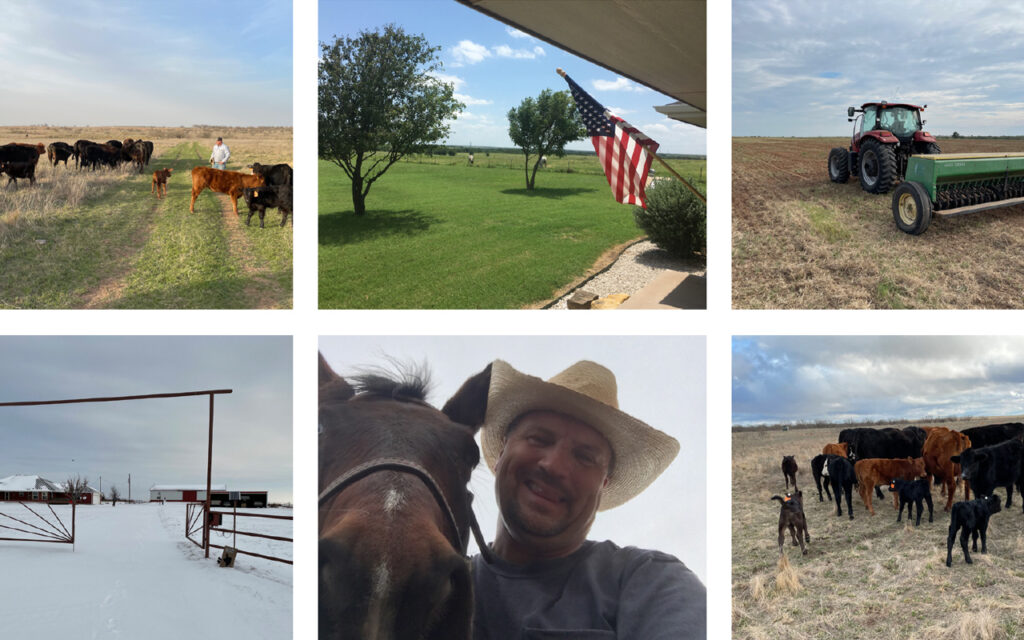
Just keeping up with the pastures requires constant mowing; then there’s repairing tractors, baling hay, birthing and weaning his Angus and Beefmaster calves, and all the other chores that come with working the land. He gets some occasional paid help from a neighbor, but otherwise, Jeff enjoys the solitary, spiritual experience of connecting with nature that comes with managing the property.
“When you see a calf being born, and then how a mother just knows what to do, that’s nothing short of a true miracle,” he said. “It rejuvenates your spirit, your sense of wonder, seeing this miracle, this circle of life, come around because, unfortunately, with ranching and farming, you get the other end of it, too.”
“You try and make the best life for these animals and it’s tough,” Jeff said. “You see the circle of life, and so when you see the good side, it kind of just renews your spirit, and your outlook, and faith.”
The Hard Economics of Working the Land
As a vocation, farmers have no control over the price they get for the products they cultivate. They are forever beholden to the whims of nature, outbursts of weather, disease, crop blight, climate change and economic forces beyond their ability to correct. Today, land use issues, including the encroachment of resource-hungry data centers, are another complicating wrinkle that pressures their livelihoods.
“It’s the worst business model that anybody’s ever seen,” Jeff said. “Whether it be your wheat or your cattle, you just take it through the sale barn, and the going price that day is what you get.”
Slowing Down: What the Farm Teaches
Beyond the economic impracticalities of the job, however, the farm life helps Jeff reconnect to his inner life, underscores his innate understanding of the overwhelming beauty of creation and places him in a space beyond the clutches of time that the working world requires.
“It’s a humble lifestyle where your land slows you down,” he said. “Every night, I usually end up working late, but I’ll walk up and feed the horse and check on the cows or something – and then all of a sudden, you just stop and you take it all in.”
“In the spring, you see the wildflowers coming up, the nature, the beauty of it all, and you just stop for a second,” Jeff said. “You look up at the beautiful sky, and the stars; you’re physically tired, but then you see what you did. It’s an honest day’s work, and I guess you appreciate life a little bit more.”
“Maybe it’s too simplistic, but I think it slows you down,” he said. “You’re working with things that you can’t control. Everything’s got to fall into place for it to work out, or wipe you out; that you get through the trials and tribulations makes you appreciate a lot more.”
“Maybe that’s the whole thing,” Jeff said. “You just appreciate the whole cycle of life and try and enjoy it. Then, what’s kind of funny as you get older is, you start thinking, ‘Man, I’m only going to have so many more harvests,’ or so many more times I get to plant this, or grow these cows. So then you start trying to really appreciate, and take it day by day when you can.”
“I think that what attracts me is that’s my one place in the world I have to slow down and stop, because there’s no shortcuts,” he said. “You just have to slow down, stop and finally enjoy it.”