

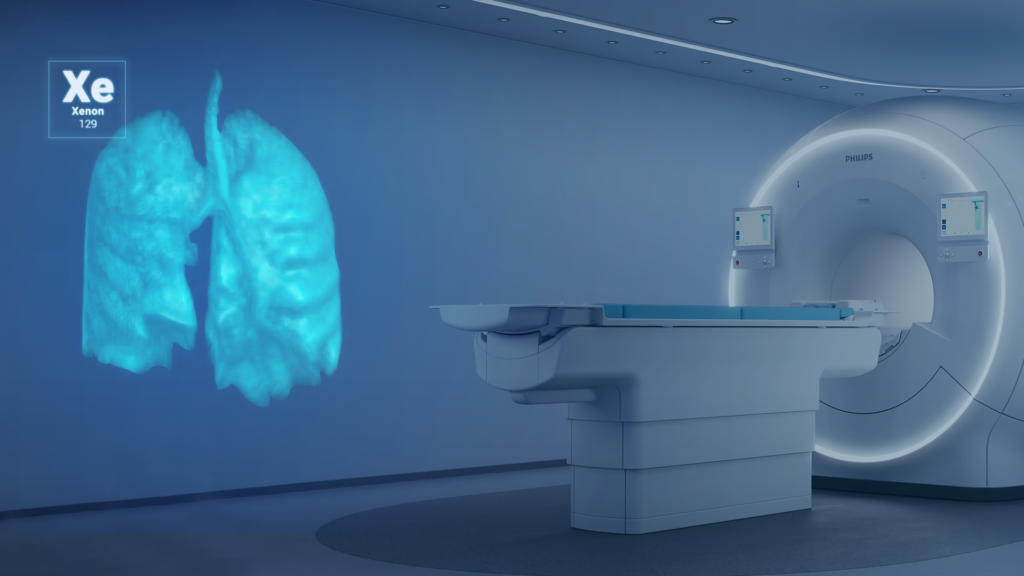
Polarean, a commercial-stage medical imaging company advancing functional MRI of the lungs, has highlighted the publication of a peer-reviewed clinical study in CHEST. The study demonstrates that structural and functional pulmonary MRI adds important new insights in predicting pulmonary exacerbations beyond standard pulmonary function tests in people living with cystic fibrosis (CF).
The study, titled “Structural and Functional Pulmonary MRI to Predict Pulmonary Exacerbations in Cystic Fibrosis,” analyzed imaging and clinical data from 106 individuals with CF who were imaged and followed at Cincinnati Children’s. Investigators from The Hospital for Sick Children (SickKids), affiliated with the University of Toronto, also collaborated on the study and data analysis. The findings show that while structural imaging reflects accumulated disease burden, Xenon MRI ventilation defects provide independent prediction of future exacerbations, even after accounting for prior clinical history and spirometry results. The results indicate that Xenon MRI can detect regional functional changes deep within the lungs that may not be captured by traditional global measures such as spirometry.
Specifically, the study found that Xenon MRI measures of ventilation abnormalities, quantified as ventilation defect percent (VDP), were significantly associated with future pulmonary exacerbation risk. Individuals with abnormal VDP experienced nearly three times the rate of exacerbations compared with those with normal ventilation, including patients with relatively preserved lung function by conventional pulmonary function testing.
“This is an important finding because it underscores the power of Xenon MRI to reveal functional changes that may be overlooked in patients with mild or gradual decline,” said Christopher R. von Jako, Ph.D., CEO of Polarean Inc. “Jason Woods and his collaborators have been driving imaging innovation in the cystic fibrosis field by rigorously demonstrating how functional lung MRI can impact meaningful clinical outcomes. A non-invasive sensitive measure in children is critical, not only in CF, but across a broad range of lung diseases where small-airway dysfunction may precede measurable changes in standard pulmonary function tests.”
Pulmonary exacerbations remain a major driver of morbidity, healthcare utilization, and long-term disease progression in CF, even in the era of highly effective modulator therapies. The ability to better identify patients at increased risk for exacerbations has meaningful implications for clinical management, monitoring strategies, cost containment, and therapeutic decision-making.
“Functional lung MRI with Xenon enables visualization of regional ventilation defects that are often invisible to conventional testing,” said Chase Hall, MD, chief medical advisor at Polarean Inc. “The sensitivity to small airway abnormalities demonstrated in this study highlights why advanced lung MRI has the potential to add value not only in cystic fibrosis, but also in other pulmonary diseases, such as asthma and COPD, that have shown similar VDP-exacerbation relationships.”