

By Matt Skoufalos
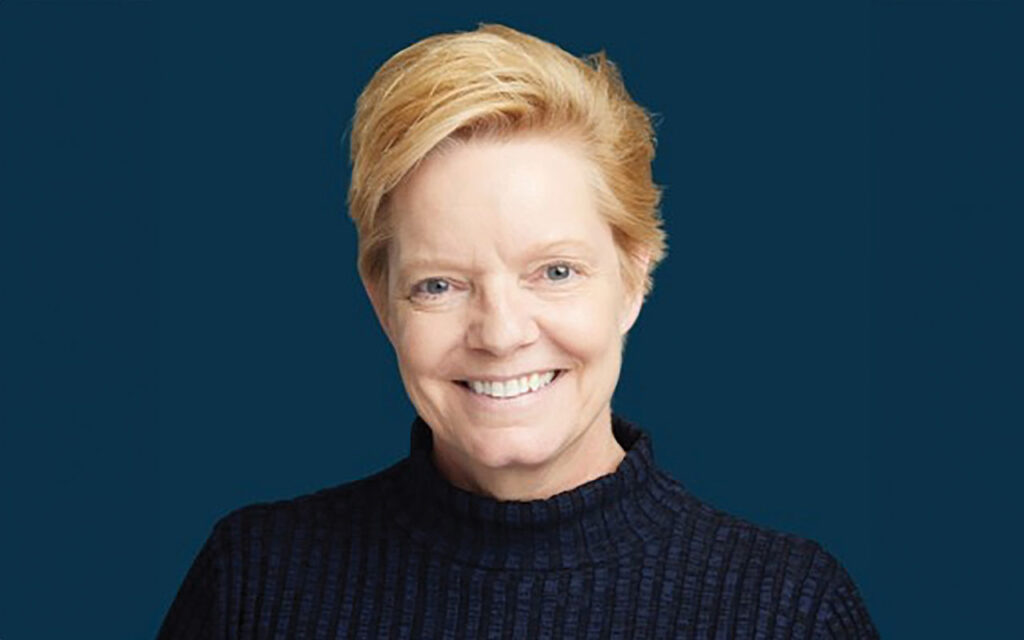
Many healthcare professionals talk grandly about the need for continuing education and forming a lifelong commitment to learning. More than most, Jennifer J. Alexander has lived it.
Alexander, who cheerily sports the nickname “Dr. J,” is a registered X-ray and CT technologist and a Certified Radiology Administrator. She holds master’s degrees in business and healthcare administration and a doctorate in healthcare administration.
“I got my associates in my 20s, my bachelor’s in my 30s, two master’s degrees in my 40s, and my doctorate in my 50s,” she said.
At UT Southwestern Medical Center, Alexander has spent a decade as the operations manager for imaging services, and has made strengthening the medical imaging workforce pipeline her principal focus in that time.
The institution runs an MRI apprenticeship, which offers on-the-job training for employees to become MRI technologists; an imaging training assistance role for radiography students to bridge them from students to imaging professionals; and an advanced imaging fellowship to cross-train technologists into other imaging modalities.
“I spend a lot of my time getting this next generation ready for careers in imaging,” Alexander said. “I attend career and job fairs and speak at the local colleges about medical imaging to get them excited about a career pathway.”
The need for new talent is essential, she said. Medical imaging plays a vital role in a patient’s journey, providing images to diagnose illness, guide treatment, and empower patients with options.
“Keeping the talent growing and learning by providing cross-training opportunities provides continued adaptation and critical thinking as they move to the next level of imaging.” Alexander said. “There are traditional ways to get into imaging by the college route, but there are other ways to upskill them by providing unique opportunities like the apprenticeship.”
Alexander views her efforts as “influencing the next generation” in closing education gaps for novice imaging professionals, and helping them learn through clinical experiences in a healthcare setting. She likens it to her own experience as a youngster, learning the electrician trade through practical training on the job site.
“Taking a frontline employee early in their career and investing in them by providing the opportunity to become a registered MRI tech is life-changing for them,” Alexander said.
“While it’s been challenging, I couldn’t have asked for a better profession,” she said. “I’m trying to stay ahead of the next generation to figure out how to motivate them, keep them, and grow them.”
Alexander focuses on helping imaging professionals hone their technical skills and education partly because her parents didn’t have a formal education to make their way in the world. Her mom, the oldest of 10 children, raised her own siblings while she was growing up herself. Due to life circumstances, both of her parents dropped out of high school. Nonetheless, her parents made their way together and uplifted the people around them.
 “The two of them together, without an education, were just hellacious,” Alexander said. “They could move product and people and truly raise people up. Each person my mom had working for her had an opportunity to unlock their true potential. She was always trying to improve everyone around her and upskill their talents.”
Alexander herself was early to enter the workforce. The Austin, Texas native spent 20 years growing up in New Mexico, where she rode dirt bikes at nine and 10 years old. She earned money working for an electrical contractor, plugging and switching for $2 an hour.
Alexander needed transportation when the family moved to a different high school district. At 14 years and nine months, she was eligible for a motorcycle license, and became the only girl in her high school who commuted to class on a Honda XL100.
“My mom bought me a pink jacket to wear,” Alexander remembers.
In school and outside of it, she hustled. Her mom helped her make breakfast burritos, which she sold off the back of the bike for $1 apiece. Alexander also spent six to eight hours a day working to make extra cash, whether at Stuffy’s Sopapillas, mowing lawns, or babysitting.
Winters were so cold that Alexander’s hands wouldn’t fully thaw from the commute until the final 15 minutes of her first-period class, which was typing. She became faster than her classmates when she had only the final few minutes of the period to complete her work.
“In New Mexico, we did fundraisers for paper,” Alexander said, a testament to some of the lower-resource regions. “When I came to Texas and saw yard art, I had never seen that before. I didn’t see one car in North Dallas with chicken wire on it.”
At 15, Alexander got her first car, but she continued to ride her step-brother’s Honda motorcycle from time to time. Her riding habit “went dormant for a while,” but Alexander revived it around 2006 when a friend tried to impress her with his Harley Sportster 1200cc.
“He said, ‘Get on the back,’ and I said, ‘I’ll drive,’” Alexander said. “We went to Sturgis on that bike, did a lot of touring, and eventually got married.”
Alexander was the only mom to drop her son off at elementary school on a motorcycle. She had a Yamaha 1100cc, her husband had a Harley 1200cc, and the two rode together all through Texas; however, the trip to Sturgis, South Dakota, was where Alexander had “my favorite adult vacation.”
“It was the best time I had ever had on two wheels,” she said. “During that vacation, we put 3,000 miles on that bike. We went to Devils Tower National Monument, Wyoming; Mount Rushmore; and Deadwood. It was the most breathtaking landscape, and my most favorite vacation ever.”
For Alexander, driving in a car will never match the carefree feeling “of oneness with the world” that comes from riding a motorcycle.
“Nothing can get me in a better mood faster than being on a bike; nothing can improve my attitude more than the freedom of a motorcycle,” she said; “that fearless sense of ‘grab life by the horns and don’t be afraid.’”
“Dr. J” and her husband, John Alexander, a former U.S. Marine Corps helicopter mechanic and retired emergency room and critical care nurse, first encountered one another at work. She said that their comfort with the risks of riding motorcycles comes from their proximity to the life-and-death circumstances that define their work.
“People are afraid of death because we’ve taken it out of the home and made it seem like it’s some kind of foreign thing, and it’s not,” Alexander said. “There are people who exist, but they’re not really alive.”
“My husband and I met on a code,” she said. “We’ve seen the worst, and we know what’s coming. We’re not strangers to what death looks like; the reality is, you have to have a strong faith, and we’re all heading in the same direction.”
“Work may get the best for now, but we still have a Harley Ultra Classic,” she said.