
By Matt Skoufalos
When Dr. Refky Nicola isn’t in the classroom or the imaging department, you might find him in the recording studio, preparing for a podcast.
In addition to working as an associate professor of radiology at SUNY Upstate Medical University in Syracuse, and as chief of radiology services at Community General Hospital of Greater Syracuse, Nicola has spent the past three years working as an assistant editor of the Radiology Journal and RadioGraphics podcasts.
Produced by the Radiologic Society of North America (RSNA) as a learning component of its publications of the same names, the podcasts have become another way for Nicola, who also works as a peer reviewer for both journals, to expand his learning and professional development.
“I’ve always had an interest in podcasts in general, [and] as a way to get through my commute,” he said. “Right before [the novel coronavirus] COVID-19 pandemic, the Radiology Journal was looking for podcasters.”
“The society has seen a need for podcasts, and that space continued to grow, and I think as it grew, it became an integral part of the journal,” Nicola said. “I think having the team that we have, all of us [having] very different interests and backgrounds in radiology helped it take off.”
The Radiology Journal podcast hits about 8,000 downloads per month, and the RadioGraphics podcast about 4,000, Nicola said. Their objectives vary slightly: the RadioGraphics podcast is intended for an education audience, and covers topics that are important to imaging trainees and medical students, while the Radiology Journal podcast focuses on cutting-edge research within the radiology field.
Its format begins with Nicola and his fellow podcast editors examining a published article from either of the journals in question, connecting with its authors, and working to elevate their findings into a conversation that’s digestible for the podcast audience in an interview style.
“I ask questions about the things in the article,” he said. “I hit the ground running. I like gathering information and talking to people, putting things together, [and] creating a story for people. My objective would be to try to let [the podcast audience] understand what’s in the article from the author’s perspective.”
After recording their interviews, production editors clean up the audio, master it, and release the episode. In that environment, Nicola sees his role as helping to create bridges between peer-reviewed academic material and the more casual listening environment of a podcast. In addition to reaching an audience that can benefit from understanding the journal content in that different format, he said that it also helps elevate the profile of the research itself.
“Studies have shown that articles that have associated episodes get more downloads, and have higher metric scores; it does have a ripple effect with having an article associated with a podcast,” Nicola said.
“I think people want a dialogue regarding the article, and I think people want somebody to tell them the important parts,” he continued. “You might not read the article, but if you listen to it you might want to read it, [and] if you give people a chance, they’ll tell their side of the story in terms of the message they’re trying to convey.”
Beyond improving the connection among the audience, the researcher, and their work, Nicola said that podcasting has made him a better listener, and deepened his appreciation for the work that his colleagues in the field put into their research.
“When people write these articles, they put a tremendous amount of time and effort into their development,” he said. “It’s only fair to allow them to educate the public or the radiologists about what their message is. That’s what I try to do. I see myself as an intermediary between the article and the audience.”
As well as bringing his audience closer to the material of the RSNA publications, Nicola said that his podcasting experience has afforded him the chance to interview “reputable, respected people within the society of RSNA,” while connecting with peers with which he typically hasn’t had the opportunity to interact.
“That’s been one of the most memorable moments for me,” he said. “I got to speak to some leaders in the field, and just getting their perspective on radiology, their career, their lives, is really fascinating. I’ve really enjoyed that.”
“I learn from these people every day,” Nicola said. “It’s nice.”
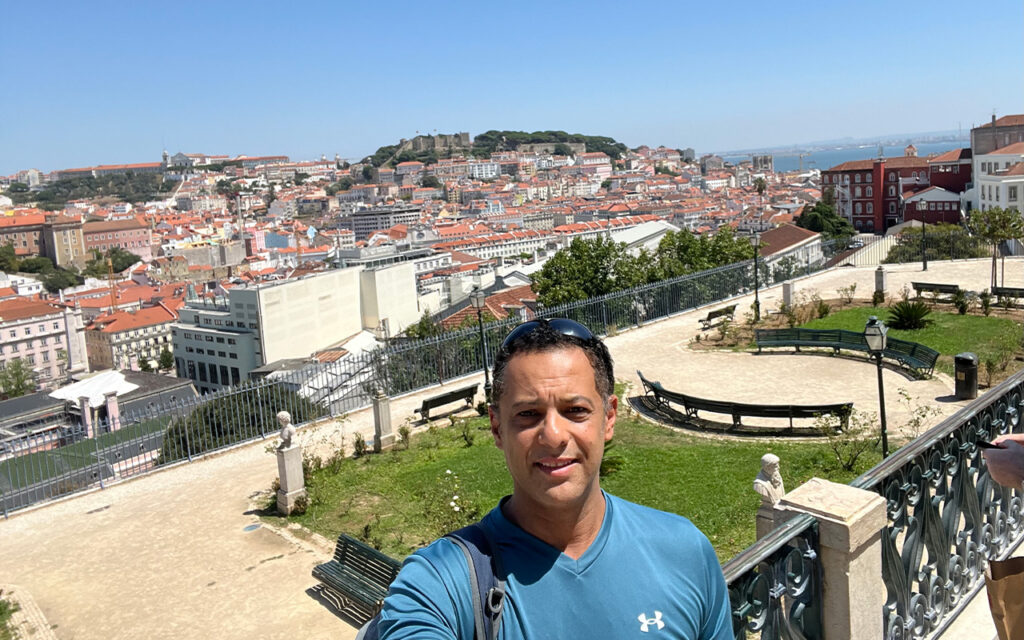
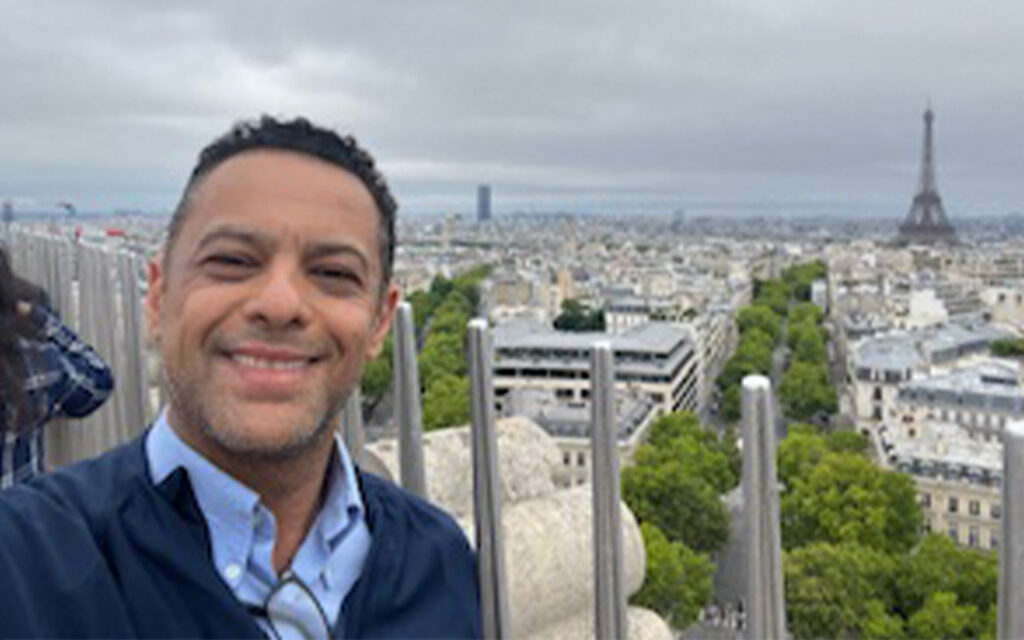
When he’s not at work, or pursuing his other interests, Nicola likes to exercise, particularly running and biking. He also enjoys traveling – he’s toured parts of Europe, including Portugal, Greece, and Sweden – and spending time with his wife and children.
“Being outdoors and traveling to a new place and a new country is something that I really look forward to all the time,” Nicola said. “If I can travel, I like to do it.”
In addition to growing the podcasts he helps to produce, Nicola said he’s interested in having more in-depth conversations with the radiology community. Whether that takes the form of multi-episode stories or other innovative formats, he’s happy to engage with his peers, his production team, and the listening audience to help make radiology topics more accessible and available.
“We still have a lot of things to do,” Nicola said. “As a team, we’re very progressive, innovative, energetic. We as a group work very hard, and we always appreciate people listening and giving their feedback. It’s nice to know that people are actually listening because we all put a lot of work into it.”
The RadioGraphics podcast can be found online at rsnaradiographics.libsyn.com/
The Radiology Journal podcast can be found at rsnaradiology.libsyn.com/