

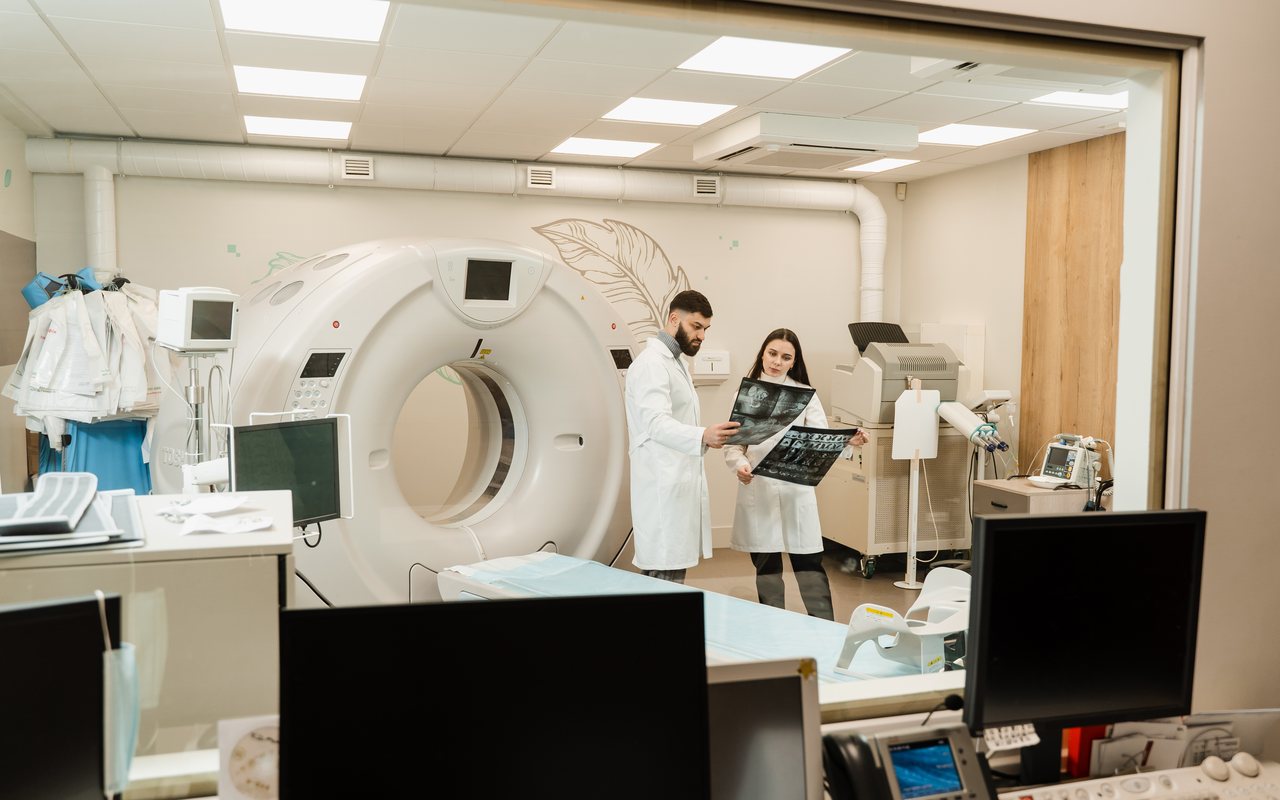
Artificial intelligence continues to reshape medical imaging, offering new opportunities to improve efficiency, prioritize exams, streamline workflows and support patient care. Yet, as more AI-enabled technologies enter the market, imaging leaders must look beyond the promise of innovation to consider clinical value, integration, return on investment, cybersecurity, staff acceptance and long-term sustainability.
For this Director’s Circle, ICE Magazine asked imaging leaders how their organizations are using AI in medical imaging, how they evaluate new solutions and what it takes to implement AI successfully.
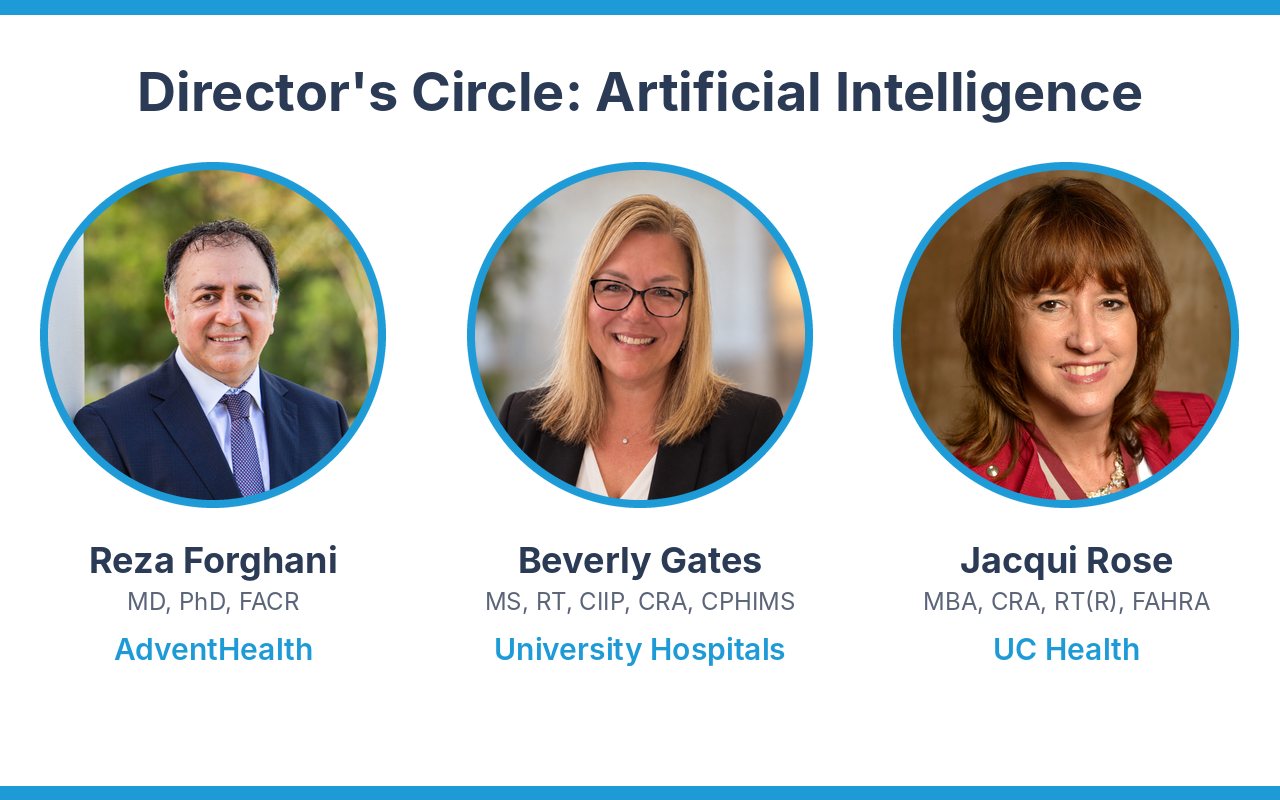
The members of the Director’s Circle panel discussion on artificial intelligence are:
- AdventHealth Chief Medical Information Officer (CMIO) for Imaging Reza Forghani, MD, PhD, FACR;
- University Hospitals (Cleveland, Ohio) Director of Radiology Informatics Beverly Gates, MS, RT, CIIP, CRA, CPHIMS; and
- UC Health (Cincinnati, Ohio) System Director of Radiology Jacqui Rose, MBA, CRA, RT(R), FAHRA.
How Imaging Departments Are Using AI Today
Q: How is your organization currently using artificial intelligence in medical imaging, and which applications have provided the most noticeable benefits to your department?
FORGHANI: We are using AI across two broad areas: clinical and diagnostic support and operational optimization. On the clinical side, we use AI triage tools that identify and prioritize studies with potentially critical findings, helping ensure that these cases are interpreted promptly. This addresses an important patient-safety and operational challenge, particularly amid ongoing radiologist workforce shortages and rising imaging volumes. Many of these tools also function as a “second reader,” augmenting the radiologist’s interpretation and helping reduce potentially important missed findings. We also use more specialized computer-assisted diagnostic applications, including AI for mammography, as well as tools for advanced image processing and quantitative analysis. Operationally, we use intelligent worklist orchestration to help ensure studies are assigned and interpreted based on factors such as clinical priority and radiologist subspecialty expertise. For a large, complex health system, this capability can have substantial impact by improving how imaging volumes are distributed, ensuring that the right study goes to the right radiologist at the right time, and promoting a more balanced and equitable distribution of workload – an important contributor to radiologist satisfaction.
We are also seeing positive efficiency gains from AI-assisted reporting and documentation tools. Examples include generating a draft impression from findings dictated by the radiologist and using AI to summarize relevant information from the patient’s chart. These capabilities can reduce repetitive work and allow radiologists to focus more of their time and attention on image interpretation and high-level clinical decision-making.
These are just a few examples. Our use of AI extends across many additional clinical and operational areas, including administrative workflows and revenue cycle management, and continues to expand as the technology matures.
GATES: University Hospitals’ Radiology Department is leveraging AI across several imaging workflows, including actionable findings detection, workflow prioritization and image processing. The most significant benefits have been faster identification of follow-up recommendations, improved radiologist efficiency through exam prioritization and enhanced technologist efficiency with image post-processing. Collectively, these improvements support more timely care delivery and improved patient outcomes. Every AI application we have adopted has provided measurable value, whether through workflow optimization, clinical support or enhanced patient care.
ROSE: Currently, we use some basic AI functionality with equipment for positioning and patient access in Epic, and our radiologists use an impression-generating system for reporting. We have multiple processes and systems in the planning phase for implementation very soon via Epic and other vendors to assist in efficiency and accuracy. In our leadership work, we use AI to assist in preparing for meetings, organizing email and creating spreadsheets and presentations.
What Makes an AI Solution Worth Adopting
Q: When evaluating a new AI solution for imaging, what factors are most important in determining whether the technology is worth adopting?
FORGHANI: When evaluating a new AI solution, I focus on the following key factors.
(1) What patient-care or business problem are we trying to solve? We should never bring in technology – including AI – simply for the sake of having the technology. Starting with the problem also helps prioritize needs among the rapidly growing number of available AI solutions.
(2) What is the evidence for effectiveness and how mature is the solution? We look at clinical or operational performance, validation and real-world experience. That said, maturity is not an absolute requirement. In some cases, a potentially high-impact technology may justify early adoption or partnership while it is still evolving.
(3) Is it a product or simply a gadget? A good model alone is not enough. We need to understand how seamlessly the solution integrates into existing workflows and the broader technology ecosystem. Workflow integration is sometimes underestimated, but ignoring it can undermine even an excellent technology. It is also one of the strongest determinants of whether end users will actually adopt the solution and whether it ultimately delivers value.
(4) What is the value, and what are the measurable outcomes? This is an extension of the first point. Before deployment, define what success looks like – better patient outcomes or safety, improved access or turnaround time, greater efficiency, reduced cost, improved clinician experience, or a combination of these. This moves the discussion from “Does the AI work?” to “Does it create meaningful value?” Just as importantly, put mechanisms in place to measure those outcomes after deployment, so you can confirm that the intended value is being achieved and recognize when the solution or approach needs to be adjusted.
(5) Is the solution scalable and sustainable? A solution that works in a pilot or at one hospital may not work across a large health system. Consider technical scalability, ongoing support, monitoring, upgrades, interoperability and total cost of ownership.
(6) How will you ensure appropriate governance and trust? Especially for clinical AI, consider safety, regulatory requirements where applicable, cybersecurity and privacy, performance across the intended patient population, and the ability to monitor performance after deployment. Clinicians also need to understand and trust the technology enough to use it effectively, while recognizing its limitations to avoid inappropriate overreliance.
GATES: We evaluate AI solutions based on clinical value, workflow integration, measurable outcomes, ease of adoption, scalability, vendor support and return on investment. The technology must address a meaningful clinical or operational challenge, integrate seamlessly into existing workflows and, ultimately, contribute to improved patient care.
ROSE: The primary factor is return on investment: How will this make us more efficient and enable greater accuracy and access for our patients? Naturally, we are looking at systems that will work together on the same platform and provide the most quality improvements to our team’s progress. Longevity and experience of the vendor system are critical to our success, and creating a relationship ensuring we reduce our risk is vital.
AI’s Impact on Workflow, Exam Volumes and Staffing
Q: How has AI affected the day-to-day workflow of radiologists, technologists and other imaging professionals at your organization? Has it helped address challenges such as increasing exam volumes, staffing shortages or turnaround times?
FORGHANI: We have seen a clear impact from both clinical and operational AI deployments. AI-enabled triage has helped improve turnaround times for exams with critical findings, such as intracranial hemorrhage or pulmonary embolism, by helping ensure that these cases are prioritized appropriately. More broadly, intelligent workflow orchestration helps prioritize urgent and time-sensitive exams across the worklist and route cases to the appropriate radiologist, improving overall workflow efficiency and supporting more timely interpretation. We have also observed an important patient-safety benefit through the “second-reader” effect of AI image analysis tools, which becomes increasingly valuable as growing exam volumes and workforce shortages place greater time pressure on radiologists. We are also seeing efficiency gains from tools such as AI-assisted impression generation, which can streamline the reporting process. While these technologies do not eliminate the underlying workforce shortage, they can help us use our available workforce more effectively. We are now evaluating next-generation technologies that have the potential to deliver an even greater impact on radiologist productivity, workflow efficiency and our ability to manage increasing imaging volumes.
GATES: AI has helped streamline workflows by prioritizing studies, reducing manual tasks and supporting faster clinical decision-making. While AI is not a replacement for clinical expertise, it has become a valuable tool for managing increasing imaging volumes, improving turnaround times and allowing radiologists, technologists and other imaging professionals to focus on higher-value patient care activities.
ROSE: Our radiologists use an impression generator, which has improved their report times and enabled them to move through cases more efficiently. We have also created a prioritization tool via Epic to enable the CT and MR teams to prioritize inpatient requests, as we have many competing cases that make it difficult for our technologists to manage the patient schedule. As with many organizations, we have a long backlog of procedures waiting to be done, and we are addressing this by optimizing access. This has increased our volume and created complications in all downstream processes. These are not new challenges; however, they must ultimately be addressed, as they are magnified with more volume. So, we are working with Epic to utilize new AI capabilities to enhance our patient care and make both communication and coordination of care easier for providers.
Overcoming AI Implementation Challenges
Q: What challenges have you encountered when implementing AI tools, including integration with existing imaging systems, staff training, workflow changes, cybersecurity, cost or gaining employee acceptance?
FORGHANI: One of the most important lessons is that you cannot rely on technology alone to solve a problem. No matter how good or mature a solution is, it needs to be adapted to the specific needs and workflows of the practice. Some technologies also introduce substantial workflow changes, so the change-management requirements need to be anticipated from the beginning rather than addressed after deployment.
End-user acceptance is paramount and depends on several factors. First, individuals with appropriate clinical and domain expertise need to be involved early to ensure that the right problem is being addressed and the right technology is selected. Workflow integration should be a major part of that selection process – if a tool introduces unnecessary friction, it can become a barrier to adoption and ultimately prevent the organization from realizing its intended value.
Communication, engagement and training are also critical before and during launch, although the level of effort and resources required will vary considerably depending on the technology and the magnitude of workflow change. All of this requires close collaboration among clinical teams, IT, operational leaders and other relevant stakeholders.
There are also broader considerations that should be anticipated rather than addressed reactively, including cybersecurity, privacy, regulatory requirements and, where relevant, questions such as malpractice exposure. For diagnostic AI that is regulated as software as a medical device, clinicians should understand the intended use of the technology, how it should and should not be used, and its potential limitations and pitfalls. Cybersecurity is non-negotiable, with appropriate security assessment and recognized frameworks or certifications, such as HITRUST, forming part of the evaluation and implementation process.
GATES: Successful AI adoption requires strong governance, thoughtful workflow design and active stakeholder engagement. Common challenges include system integration, change management, cybersecurity reviews, demonstrating value and ensuring users understand how AI complements rather than replaces their expertise. We are intentional about ensuring AI tools integrate into existing workflows without introducing additional steps or complexity. For example, because our organization uses Epic Secure Chat as its standard communication platform, we require AI vendors to disable proprietary messaging tools to avoid fragmented communication channels and reduce the risk of missed clinical notifications.
ROSE: We always try to minimize our challenges by practicing inclusion of all stakeholders in the process. This helps with buy-in when they are designing the tool. We are very lucky to have an amazing team of radiologists, technologists, IT specialists and referring physicians who are all invested in making the patient, technologist and provider experience the best it can be. This sometimes takes longer for implementation; however, when all work together, the journey is much smoother!
Evaluating Clinical Performance and ROI Before Purchase
Q: With a growing number of AI-enabled products available for medical imaging, how does your organization evaluate clinical performance, return on investment and long-term value before making a purchase?
FORGHANI: Many of these considerations overlap with the earlier questions, but a key principle is that KPIs, expected value and ROI should be defined at the outset, not after a technology has been deployed. This helps both in selecting the right solution and in establishing clear expectations for what success should look like.
The specific measures will depend on the problem being addressed and may include turnaround time, productivity, user experience, clinical outcomes, safety, cost avoidance, direct financial return, along with other possible metrics, or a combination of metrics depending on the tool being implemented. These should be assessed after an appropriate period of implementation and stabilization and then monitored periodically to ensure that the expected value is being sustained. For clinical AI in particular, ongoing monitoring is also important to identify potential performance degradation or drift where applicable. Ultimately, purchasing the technology is not the endpoint – the goal is to demonstrate and sustain meaningful value over time.
GATES: We use a structured evaluation process that includes clinical validation, workflow assessment, operational impact analysis, financial review and pilot testing when appropriate. Small-scale pilots are an effective way to validate the use case and measure real-world value before broader deployment. Long-term success depends on demonstrated clinical benefit, sustainable adoption, measurable efficiency gains and alignment with organizational goals. Engaging key clinical stakeholders throughout the evaluation process is critical to achieving successful outcomes.
ROSE: Currently, we are in the initial phases of developing a system and departmental governance model to evaluate clinical performance, return on investment and long-term value along with all aspects of implementation. In the meantime, this is done at a departmental level and reviewed with the broader IT team upon submission for the project design.
Final Thoughts on AI for Imaging Leaders
Q: Is there anything else you would like to share with ICE readers regarding AI?
FORGHANI: I think we have covered the major considerations, but I would leave readers with three principles. Start with the problem, not the technology: Be clear about the patient-care or business problem you are trying to solve. Make AI a multidisciplinary effort: Involve clinical domain experts, end users, IT and other relevant stakeholders early in the process. And finally, remember that technology alone is rarely the entire solution: Take a first-principles look at the underlying workflow – eliminate unnecessary steps and optimize the process before simply automating it. Otherwise, you risk using AI to make a suboptimal workflow faster rather than making it better. Realizing the full value of AI often requires workflow redesign, appropriate operational interventions and effective change management.
GATES: AI should be viewed as an enabler of more efficient, higher-quality patient care rather than simply a technology investment. Organizations that focus on governance, workflow integration, clinical outcomes and user adoption are most likely to realize meaningful and sustainable value from AI in medical imaging. Equally important is avoiding duplication of capabilities across multiple solutions, which can increase costs, create workflow variation and hinder user adoption. A thoughtful, strategic approach to AI implementation yields the greatest long-term benefits for both providers and patients.
ROSE: I fully understand there are varying degrees of opinion and acceptance in our world regarding AI.
To optimize our use of AI systems, we must establish a strategy and governance model that helps teams prioritize AI use cases, allocate resources and guide implementation through clear decisions, shared standards and defined accountability. Otherwise, there is a haphazard approach, which leads to frustration and sometimes poor adoption. AI is too expensive to allow that to happen. So, being intentional in our approach is critical to the successful adoption of AI capabilities. •
Across AdventHealth, University Hospitals and UC Health, the message is consistent: AI in medical imaging delivers the most value when it starts with a clearly defined problem, fits seamlessly into existing workflows and is backed by strong governance, measurable outcomes and engaged end users. For a look at where the market is headed, see this month’s Market Report on the AI in medical imaging market.