

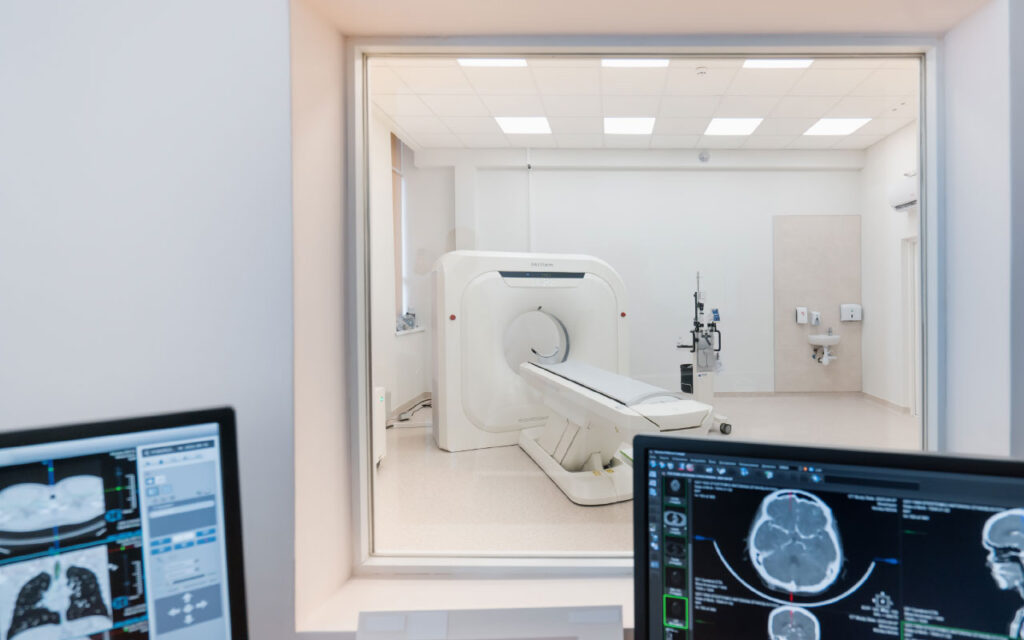

In my previous article, I shared a moment that really humbled me. I was standing in a brand-new imaging department, one of those places that looks like a million bucks on a blueprint. It had the latest equipment, the sleekest finishes and a layout (even from the parking) that was theoretically flawless.
But the patient volume just wasn’t there.
When I asked why, it was blunt. It wasn’t about the technology. The patients quietly said: “It feels too modern.” Or, more heartbreakingly, “It doesn’t feel like it was built for us.”
That hit me hard. It was a reminder that patients don’t experience a facility as “architecture.” They experience it as a feeling, especially when they’re anxious, in pain or walking in with a history of healthcare experiences they didn’t choose.
To lead a successful department, we have to understand a framework that is just as vital as clinical protocol: “environmental determinants of Care.” These are the physical, social and symbolic features of a space that shape whether patients feel safe enough to engage.
It’s Not ‘Decor!’ It’s Biology
We often think of design as an aesthetic choice. But for a patient, design is a message. When the brain is under stress, it stops processing logic and starts scanning for threats.
I think of Environmental Determinants in three layers that decide whether a patient trusts us, or quietly opts out:
1. Physical Layer: “Can I steady myself here?” This is what a patient sees, touches and hears.
- The Wayfinding Tax: Have you ever been late for an appointment and couldn’t find the right door? That spike in cortisol makes a patient defensive before they even meet the technologist. Gosh, not to mention the anger and frustration adding more emotional intensity to the interaction. And God forbid, the patient gets to the front desk and they say, we “no-showed you.”
- The Sensory Load: A cold, echoing hallway doesn’t just feel “clean.” It can feel interrogative or even sterile, this is the place where I can die.
2. Social Layer: “Am I alone in this?” This is how the space shapes human interaction.
- The “Fortress” Desk: High, glass-shielded reception desks signal that staff need protection from patients. It creates an “us vs. them” dynamic immediately.
- Visibility of Help: Trust is built through line-of-sight. If a patient can see a staff member, their nervous system settles. If they hit a “dead zone,” anxiety rises.
3. Symbolic Layer: “Do I belong here?” This is the layer we most often miss. Ultra-minimalist, high-end design can signal emotional distance. To a manager, it looks like efficiency. To a patient, it can look like exclusion. Even with minimalism and sleek modern design, warmth and invitation are important.
Gown Journey: A Case Study in Vulnerability
Think about the moment a patient puts on a gown. In that second, their social status disappears. They are physically exposed and psychologically vulnerable.
I’ve walked through departments where patients once changed have to walk past the main public waiting room to reach a sub-waiting area. We may have a policy that says “Patients first,” but the environment is telling them, “Your dignity is secondary to our floor plan.”
And if a patient feels exposed, they aren’t going to be “compliant” during a scan. They’ll be tense. A tense body leads to motion artifacts, repeat sequences, and a schedule that starts slipping before lunchtime. The interaction can also be forced and cold with their underlying embarrassment, vulnerability and frustration.
Signage Audit: Changing the Tone Without Renovating
You don’t need a renovation budget to improve the symbolic environment. Look at your signs.
- Do they say: “RESTRICTED AREA: DO NOT ENTER”? (A command that triggers defensiveness).
- Or do they say: “STAFF AREA: We will come get you shortly”? (A boundary that offers reassurance).
Institutional language tells patients they’re being processed. Partnership language tells them they’re being cared for. Read that again.
10-Minute “Human Audit”
Try this tomorrow. Walk your floor, not as a manager, but as a person.
- Arrival: Can I find my way if I’m too anxious to think clearly?
- Change: Do I feel protected or on display in my gown?
- Wait: Does this space expect me to comply, or does it support me to succeed?
The Bottom Line
Imaging departments don’t lose volume because their technology is old. They lose volume because their environment is “loud.”
When you treat the environment as part of the exam, you stop managing facilities and start managing human trust. In imaging, trust isn’t just a “nice-to-have.” It’s a performance lever.
One metric to track for 30 days: Track Exam Interruptions (pauses, extended time or rescheduling due to anxiety/confusion). It’s one of the fastest ways to see where the environment is working against you.
Next, I’ll explain how environments don’t just influence comfort – they actively construct trust. •
Nicole Dhanraj is a radiology administrator and workforce strategist focused on military-to-healthcare transition pathways. Radiology leaders interested in exploring this approach are encouraged to connect with her directly at nicoledhanraj@gmail.com.