

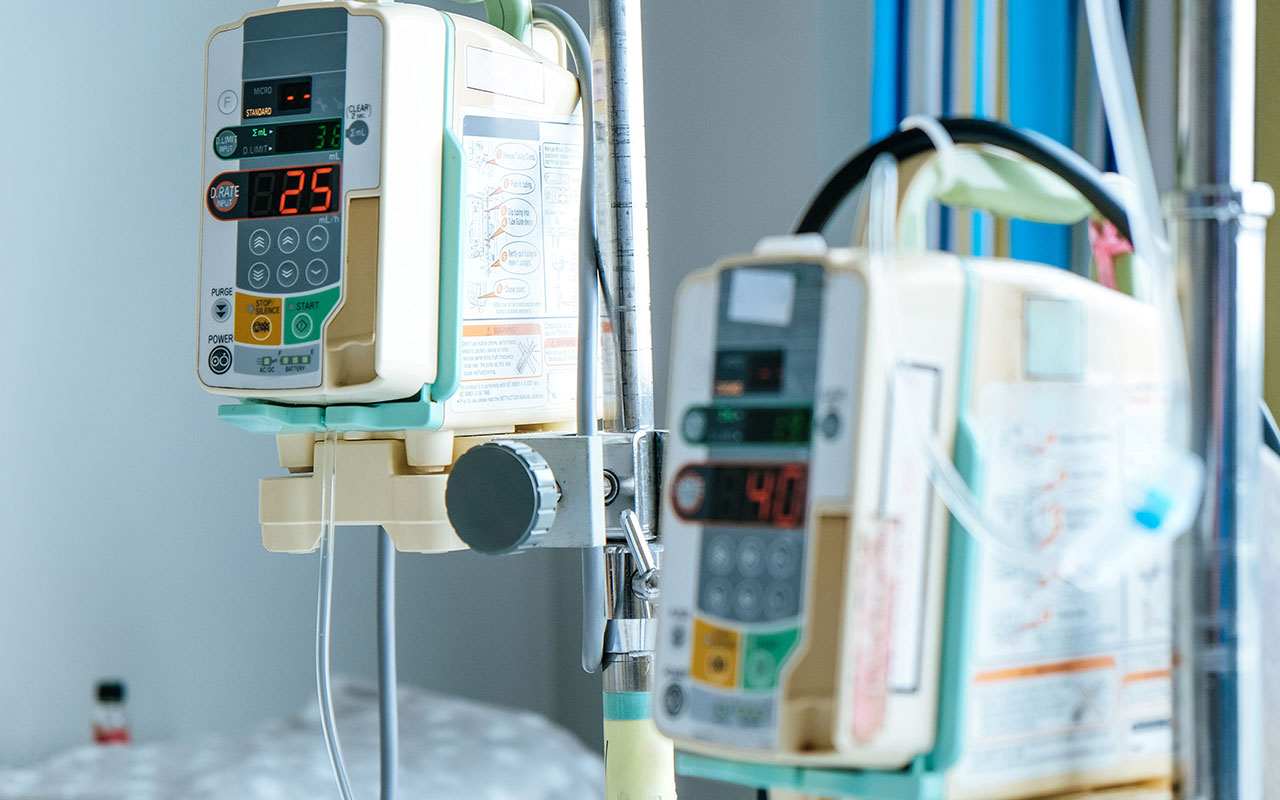
 Infusion pumps sit in a special place in healthcare. They are everywhere, they touch medication delivery, and they run quietly in the background while clinicians focus on the patient. Because they are so common, people sometimes forget how much technology is inside them. Modern pump fleets depend on software, network connections, drug libraries, central management servers, wireless coverage, user logins, remote support tools, and a steady flow of updates and configuration changes.
Infusion pump security is not an “IT side project.” It is part of safety and reliability, right alongside preventive maintenance, calibration and battery checks. When infusion pump cybersecurity is weak, the risk is not just stolen data. The risk is downtime, delayed therapy and a hospital scrambling to keep medication delivery running while systems are unstable.
A well-run Security Operations Center (SOC) helps stop that scramble before it starts. A good SOC feels like a fire station crossed with a quiet reading room. There is always urgency in the background, but most of the work is slow, careful and methodical. SOC staff watch for trouble the way a maintenance team watches for early signs of failure. They look for small shifts in behavior that suggest something is drifting out of control. In the infusion pump world, those shifts can show up as unusual network traffic between pumps and a server, strange login patterns in the pump management console, unexpected changes to drug libraries, or a vendor remote session that starts at an odd hour. The core practices sound simple: watch everything, log everything, verify everything, and never assume you have seen the last weird pattern. In a busy hospital with thousands of devices, those simple ideas turn into daily discipline.
Most attackers do not wake up thinking, “I want to hack an infusion pump.” They wake up thinking, “I want access.” They want a foothold inside a hospital network. They want credentials they can reuse. They want systems they can disrupt for ransom. Pumps and their management systems can become part of that story because they are widely deployed and often connected in ways that are hard to redesign quickly. Pump ecosystems may include legacy components, shared service accounts, older operating systems in management servers, and vendor tools that are difficult to replace. Even when a pump itself is locked down well, the supporting systems can be exposed if patching is delayed, access is shared or logging is thin.
Hospitals also run on speed and trust. If a device “usually works,” people rely on it and move on. That is normal in clinical care, but it can create security gaps. In real life, small gaps pile up. A password that is the same across multiple devices, a remote access rule that is too wide, an out-of-date certificate, or a drug library workflow that is not tightly controlled can create openings. Security work is about closing those openings without breaking clinical flow. That is where the SOC, clinical engineering, IT, pharmacy leadership, and vendors need to operate like one team instead of separate silos.
Most SOCs divide work into tiers, and the tier approach matters in infusion pump security because speed and accuracy both count. Tier 1 analysts are the first set of eyes. They watch alerts and signals, and they sort noise from the few events that truly matter. In a hospital, noise is constant. Pumps connect and reconnect. Firmware checks happen. Wireless roaming looks “busy” even when it is normal. A Tier 1 analyst learns what normal looks like for a pump subnet at 2 a.m. They learn what normal looks like when pharmacy publishes a new drug library. They learn how many management console logins are typical during shift change. They learn the difference between planned vendor support and a remote access session that is not on the schedule.
Tier 2 analysts take cases that look real or confusing and work them deeper. In pump security, Tier 2 might investigate why a management server is pushing unusual commands, why a set of pumps is beaconing to an unfamiliar destination, or why a service account tied to pump management suddenly shows activity from a workstation that should never use it. Tier 2 work is about building a story with evidence, not guessing. A good
Tier 2 analyst looks for the “shape” of the event. Is it a misconfiguration, a workflow change that was not communicated, or does it match a known attack pattern like credential misuse and lateral movement? In infusion pump ecosystems, that story often includes clinical context. For example, if pharmacy is updating a library and clinical engineering is testing a new configuration, the system may legitimately look noisy. The SOC must know how to validate that quickly without slowing care.
Tier 3 work begins when cases get technical and high risk. Tier 3 might analyze suspicious files found on a pump management workstation, dig into a network capture to see what a device is really talking to, or hunt for hidden persistence on a server that coordinates pump updates. Tier 3 staff also tend to be the bridge builders. They work with clinical engineering to understand the normal behavior of the pump fleet. They work with IT infrastructure to confirm segmentation and firewall rules. They work with vendors to validate patch plans and remote access methods. This is the kind of work that needs quiet focus, patience and strong documentation.
In infusion pump security, the SOC cannot succeed on skill alone. Leadership sets policies and expectations, and those expectations decide whether the SOC is reactive or prepared. Leaders define what “normal” looks like for the hospital and what “not normal” requires immediate action. They decide response targets, who gets called after hours, and how to coordinate containment actions so patient care is protected. They also define evidence handling rules, because in serious incidents, the details may matter legally and operationally. If a pump management server is compromised, the hospital may need to prove what was touched, what was not touched, and what actions were taken. Without clear leadership guidance, people hesitate. In security, hesitation is expensive.
A strong SOC, backed by clear policies and smart automation, can protect infusion pump fleets in a way that supports care instead of disrupting it. It can catch early signs of trouble, connect the dots across systems, and bring the right people together quickly. The end goal is not perfect security, because no environment is perfect. The goal is resilience. It is keeping medication delivery steady, keeping systems trustworthy, and keeping patients safe when the digital world gets noisy.
Mark Watts is an experienced imaging professional who founded an AI company called Zenlike.ai.