

 The “Global Mobile Medical Imaging Market Trends and Growth Opportunities” report has been added to ResearchAndMarkets.com’s offering.
This study reports on trends, challenges, drivers, restraints, competitive landscape and growth opportunities for mobile medical imaging systems in different clinical settings, including at-home medical imaging and remote diagnosis.
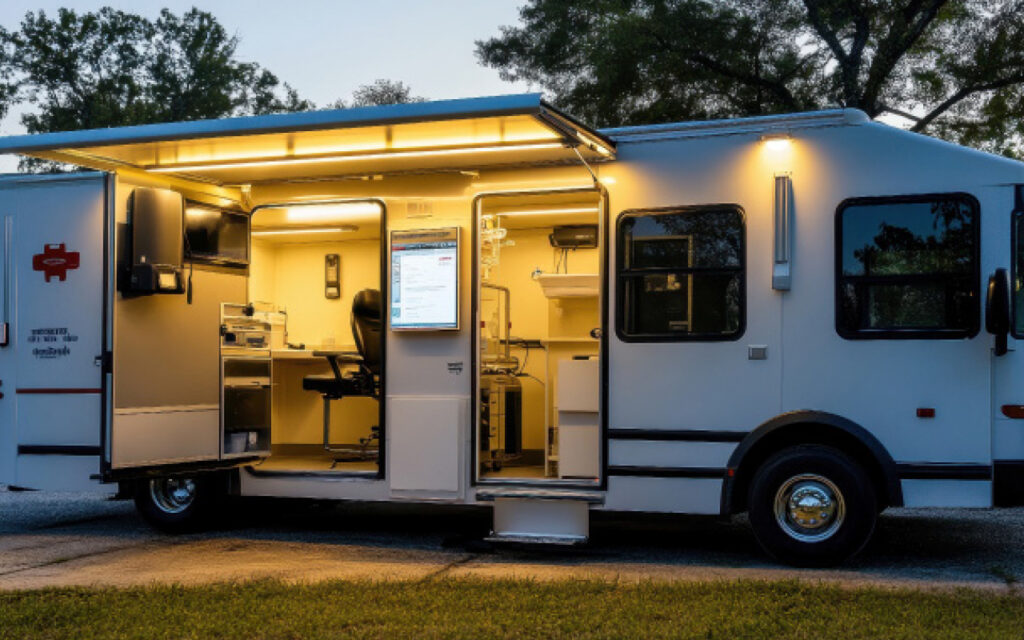
The report focuses on mobile imaging equipment for POC settings, enabling bedside imaging and remote diagnosis (excluding conventional, trailer-mounted mobile imaging equipment that users must transport to different locations). The geographic scope comprises North America, Europe, APAC, and the rest of the world (RoW).
There is a growing demand for mobile imaging equipment in low- and middle-income countries because of limited financial resources to procure, operate and maintain expensive medical imaging equipment. Other challenges include irregular power supply, poor network connectivity, inadequate site infrastructure, and delays because of the geographical distance from original equipment manufacturers.
In addition, telemedicine and remote monitoring have experienced rapid adoption in Asia-Pacific (APAC) markets (e.g., China, Korea, Japan, India, and Australia), especially after the COVID-19 pandemic, as they have been an effective medium for delivering healthcare services globally, especially in rural areas.
Some challenges with mobile imaging include low diagnostic quality compared to conventional medical imaging systems. However, health care professionals can use mobile imaging solutions in clinical applications where high-resolution images are not required and as a supplement to traditional medical imaging equipment to free up the latter for when high-resolution images are required.
Cybersecurity is another challenge, as mobile imaging systems often handle personal health information. Regulations on patient data privacy and data sharing may slow the adoption of point-of-care (POC) imaging equipment.
Global Market Insights reports that the mobile imaging services market size was valued at $15.1 billion in 2022 and is estimated to account for $24.9 billion by 2032. Mobile imaging services, also known as portable mobile equipment, are used to offer easy access to diagnostic imaging. The major factors driving the growth of the market include rise in demand for portable medical imaging technology and services, and the growing prevalence of chronic diseases.
Fortune Business Insights issued a report that states that the global mobile imaging services market size was valued at $1.85 billion in 2023. The market is projected to grow from $1.94 billion in 2024 to $2.91 billion by 2032, exhibiting a CAGR of 5.2% during the forecast period. North America dominated the mobile imaging services market with a market share of 37.84% in 2023.
Mobile imaging services use portable imaging equipment to provide comprehensive X-ray, ultrasound and EKG services to various health care settings, including hospitals, long-term care settings and others. These services enable patients to have flexible access to imaging technology.
The growing prevalence of various chronic conditions, including cancer, cardiology diseases and others, is resulting in a rising number of patient admissions in hospitals and private clinics. Furthermore, the growing number of patient admissions is contributing to the surge in demand for these services among the patient population.