

 By Nicole Dhanraj
In the first article, we talked about why onboarding needs to be treated as a long-term engagement strategy, not a one-week administrative task. See the first article at theicecommunity.com/?p=76971
This guide builds on that by offering a practical structure you can apply right away, even in a busy, high-pressure department.
If you’ve ever had a great hire leave within the first few months, there’s a good chance the issue wasn’t the job it was how the job started. This 90-day guide is designed to help you change that.
It’s simple, sustainable and built for real-world imaging teams where time is tight and support has to be intentional.
Why 90 Days?
Orientation gets someone in the door. Onboarding helps them stay.
Research (and experience) shows that what happens in the first 90 days has a major impact on whether a new employee becomes a long-term contributor or starts looking elsewhere.
That’s why this guide focuses on creating a consistent experience across three phases:
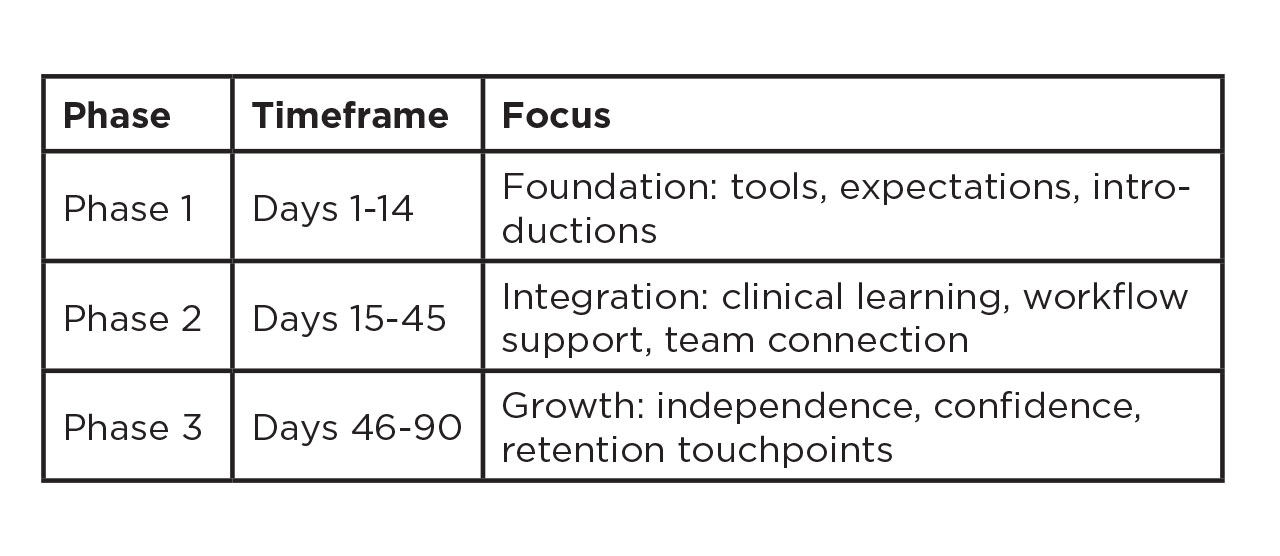
Let me show you the specifics.
Phase 1: Getting Started (Days 1-14)
In this phase you are looking to lay the groundwork. Make sure the basics are in place and the new hire feels welcomed and supported, not just informed.
Key actions include:
- Assign a point person (lead tech, supervisor or peer mentor)
- Confirm access to all systems: PACS, RIS, EMR, protocols, shift communications
- Review basic expectations: shift flow, documentation, communication norms
- Share a simple 90-day onboarding roadmap
- Introduce them across shifts and teams, not just who they’ll work with today
- Schedule weekly check-ins starting now
Check-In Focus:
- First impressions and early questions
- Any missing tools or access issues
- Comfort level with initial tasks and shift expectations
- Identify one or two small early wins to build momentum
Phase 2: Building Confidence (Days 15-45)
In Phase 2, you will support skill-building, clarify workflow expectations and create meaningful connections with peers and leaders.
Key actions include:
- Keep weekly check-ins going (short, focused, predictable)
- Provide real-time feedback during shifts, reinforce good work and clarify expectations
- Track progress on clinical and workflow milestones
- Invite to team meetings or huddles, even if they’re not presenting
- Encourage cross-training or observation with other modalities
- Schedule a midpoint leadership touchpoint
Check-In Focus:
- What’s becoming more comfortable?
- Where are they still uncertain?
- Do they feel like they know who to go to for help?
- Recognize effort and visible progress
Phase 3: Transition to Independence (Days 46-90)
The goal here is to support the shift from learning to ownership. Reinforce confidence, team connection and readiness for longer-term goals.
Key actions include:
- Gradually reduce oversight (based on performance and comfort)
- Confirm readiness for solo workflow, call coverage (if applicable) and shift independence
- Invite feedback from peers they’ve worked with
- Schedule a final onboarding review: highlight wins, gather input, discuss development goals
- Ensure they’re included in the rhythm of the department (communications, initiatives, informal culture)
Check-In Focus:
- What do they feel most confident about now?
- Any remaining gaps or questions?
- Feedback on the onboarding experience – what helped, what was missing
- Talk through what comes next in their growth (cross-training, leadership interest, etc.)
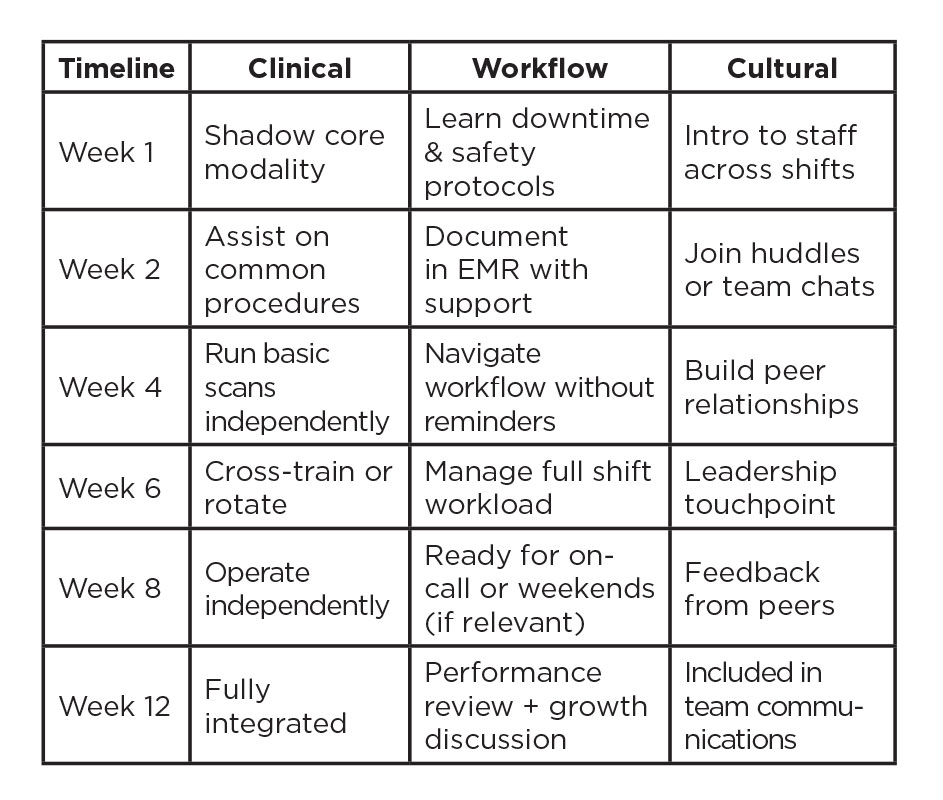
Sample 90-Day Roadmap
Keep It Sustainable
This onboarding approach doesn’t require a complex system or hours of extra time. What it does require is consistency, follow-through and a department-wide expectation that onboarding is part of leadership, not just HR.
When new hires are supported beyond the first week, they get up to speed faster, stay longer and become contributors to a stronger department culture.
After 90 Days: Keep the Momentum Going
The 90-day mark isn’t the end of the journey; it’s the handoff to long-term engagement. By this point, new employees should be clinically independent and culturally integrated. But they still need continued check-ins, development opportunities and recognition.
Here are a few ways to maintain momentum:
- Monthly 1:1s: Transition from weekly check-ins to monthly development conversations.
- Professional goals: Revisit growth areas discussed during onboarding – cross-training, certification or project work.
- Peer involvement: Encourage them to support the next new hire, reinforcing their sense of contribution.
- Leadership visibility: Keep senior leaders connected through informal touchpoints or ongoing check-ins.
The transition from onboarding to long-term engagement should feel seamless not like the support suddenly disappears. Maintaining that connection keeps retention high and morale strong.
If you’d like to connect or share what’s working in your department, I’d love to hear from you. Reach out anytime: nicoledhanraj@gmail.com.
Nicole Dhanraj, Ph.D., SHRM-SCP, PMP, GPHR, CPSS, CRA, R.T(R)(CT)(MR), is an experienced imaging director.