

 By Daniel Bobinski
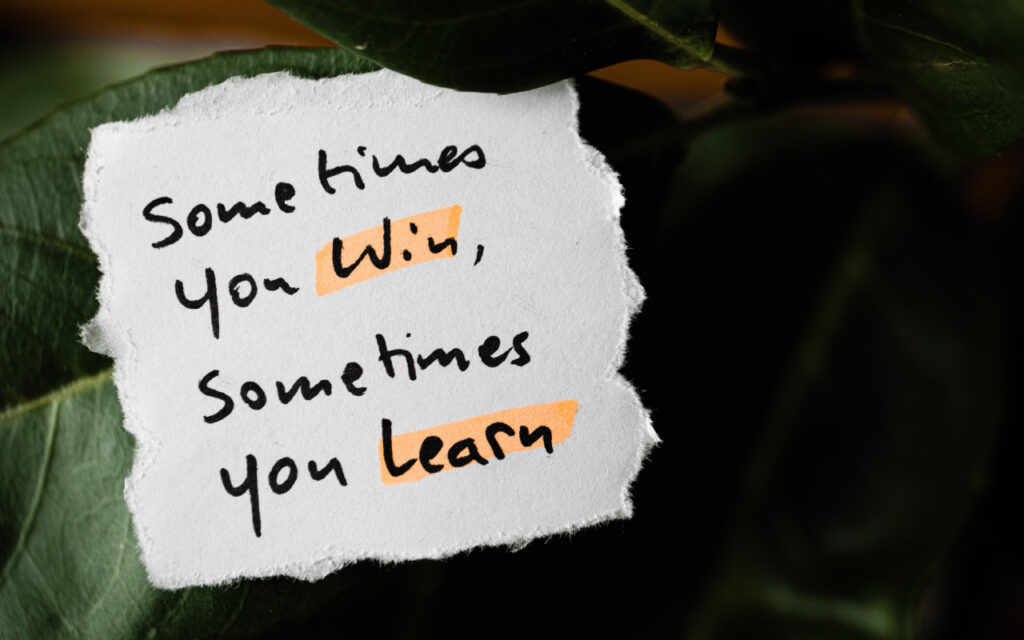
 If you’re a human being, count on the fact that mistakes will be made. Just know that we have choices in how we deal with them. We have two basic choices. We can find satisfaction in pointing fingers and assigning blame when mistakes are made, or we can learn from them.
A simple example is what we do when a child’s bicycle gets a flat tire. It’s not good parenting to blame the child for not seeing what caused the flat. It’s much healthier to educate the child on what commonly causes flat tires and offer encouragement rather than blame. This response promotes resilience and reinforces confident perseverance.
At question, why do so many adults choose to criticize each other instead of showing empathy? One answer might be the belief that adults should know better. I’ll respond by saying that, outside of people being passive-aggressive, I don’t know a soul who intentionally makes mistakes at work.
In my years of working with organizations, I’ve observed that too many people think they’ve done their job if they identify whoever’s guilty of making a mistake. After they make an announcement that the perpetrator has been assigned the blame, they check the box and move on.
That’s it. There’s no striving to find out the cause of the error. There’s no review or retraining to prevent the mistake from happening again. The people in charge simply prioritize the short-term task of identifying the wrong doer over the long-term effort of improving organizational effectiveness.
Remember, we’re all human, so mistakes will be made. The key is to make only new mistakes. That means we must invest time in understanding and resolving the root causes when things go wrong. Evidence shows that organizations get stronger when they embrace mistakes as learning opportunities rather than as reasons for punishment.
Turning Errors into Learning
One story of learning from mistakes comes from Coca-Cola’s 2004 launch of the Dasani water brand in the UK. The company was marketing Dasani as “pure, still water” using a highly sophisticated purification process, but soon it was revealed that the company was merely adding minerals to London’s tap water.
That was bad enough, but the situation escalated when a batch of Dasani was found to contain bromate, a suspected carcinogen, at levels exceeding legal limits. Health authorities stated there was no immediate risk, but public trust in the brand plummeted. The company ended up recalling half a million water bottles, then withdrew Dasani from the UK altogether. They also cancelled their plans to expand the brand into France and Germany.
This was an expensive set of mistakes, but public records show no executives or employees were fired as a result. Instead of attributing blame to individuals, Coca-Cola publicly apologized for the incidents and then focused on re-evaluating its production and marketing practices. The mistakes led the company to improve their transparency and authenticity, and they worked to restore their reputation by underscoring the value of learning from mistakes.
Another example involves what could have been labeled a hiring mistake. The assistant director at a small hospital faced a situation in which an underperforming new hire struggled to get up to speed. Rather than terminate the employee, the assistant director evaluated the situation and realized that the hospital’s onboarding system could be improved. The result? The new hire was paired with a mentor and an improved training plan was implemented. Three months later, the new employee was performing beyond expectations.
It would have been easy for the assistant director to fire the employee and blame Human Resources for making a bad hire. Instead, lessons were learned and improvements were made.
Errors can lead to growth
Organizations that emphasize learning from failure can reap many benefits. In Amy C. Edmondson’s 2011 Harvard Business Review article “Strategies for Learning from Failure,” she highlights how blame can hinder problem-solving by triggering defensive behaviors in employees, effectively shutting down their ability to analyze and correct errors. By contrast, companies that focus on finding solutions instead of placing blame often experience increased innovation and improved team morale, which lead to higher levels of performance.
Additionally, in their book “Whoever Makes the Most Mistakes Wins,” authors Richard Farson and Ralph Keyes state that failure is a complement to success, not its opposite. Their evidence shows that encouraging employees to take risks without fear of retribution promotes creativity and adaptability. These attributes are essential in today’s fast-changing workplace.
To help transform mistakes into opportunities, organizations can work towards putting the following practices into place:
1. Create a safe work environment. Employees should know it’s OK to admit mistakes without being afraid of punishment or being humiliated in front of their peers. This “truth is healthy” practice allows teams to collaborate on finding solutions and prevent similar errors in the future.
2. Encourage examinations. When mistakes occur, constructively analyze them by asking key questions, such as, “What went wrong?” and “What could be done differently next time?” Perhaps training needs to improve. Perhaps policies need to be updated. By examining the root cause of problems, teams can learn and grow.
3. Positively acknowledge extra efforts. Recognize employees who take intelligent risks to make the workplace more effective or efficient. Even if their efforts don’t succeed initially, by openly valuing the effort of trying new approaches you reinforce a growth and improvement mindset.
4. Lead by example. This phrase can get overused, but it’s true: leaders must model the behavior they wish to see in others. When leaders discuss their own mistakes and the lessons they learned, they demonstrate their humanness and reinforce the idea that learning from mistakes is a natural part of innovation.
Bottom line, we have a choice. We can treat mistakes as stumbling blocks or as steppingstones. You may recall that in 2009 and 2010, engineering mistakes at Toyota led to public criticism over safety issues, including unintended acceleration. Nobody is known to have been fired for those mistakes. Instead, the company revamped its quality control processes and changed its engineering and manufacturing processes. In other words, they learned from their mistakes and improved their company.
Daniel Bobinski, who has a doctorate in theology, is a best-selling author and a popular speaker at conferences and retreats. For more than 30 years he’s been working with teams and individuals (1:1 coaching) to help them achieve excellence. He was also teaching Emotional Intelligence since before it was a thing. Reach him by email at DanielBobinski@protonmail.com or 208-649-6400.